Wednesday, June 3, 2026

Indistinguishable from magic - Strange New Words - June 2026

Indistinguishable from magic | And the winner is... | "The Star" by Arthur C. Clarke
Created for znamenski.spacecom@blogger.com | Web Version
 
June 3, 2026
FOLLOW US X Facebook Instagram Youtube
 
Space.com
Space.com's Sci-Fi Reader's Club SIGN UP ⋅   WEBSITE
 
 
Indistinguishable from magic
Welcome aboard the June edition of Strange New Words! We're back on our regular schedule now, and that means one thing: it's time to reveal the sci-fi short story we'll be reading for June.

We've totalled up your votes, and the winner is… "The Star" by Arthur C. Clarke.

One of the most influential sci-fi authors of all time, Clarke was the visionary mind behind "2001: A Space Odyssey" and "Rendezvous with Rama," though you might know him best for the quote "Any sufficiently advanced technology is indistinguishable from magic", which is now so ubiquitous in sci-fi fandom that it borders on cliche. It's a hell of a line, though.

Compared to his full-length works, "The Star" is a positively breezy experience at just four pages, but it packs enough existential and theological philosophy in that short runtime to shake your worldview, no matter your beliefs.

As always, we'll be meeting up at the end of the month to discuss our thoughts on the story. We'd love to hear your thoughts and questions, too — drop us an email at community@space.com or leave a comment on this month's Strange New Words article. We'll aim to answer them in our video discussion at the end of the month.

Ian Stokes,
Entertainment Editor


This Month's Short Story
 
And the winner is...
"The Ones Who Walk Away From Omelas" by Ursula K. Le Guin - 24%
 
"I have no mouth and I must scream" by Harlan Ellison - 25%
 
"The Star" by Arthur C. Clarke - 51%
 
 
"The Star" by Arthur C. Clarke
A religious astrophysicist makes a discovery at the far edge of the cosmos that shakes his beliefs to their core.

Written by sci-fi legend Arthur C. Clarke, "The Star" first appeared in the science fiction magazine Infinity Science Fiction in 1955, before winning the Hugo Award a year later in 1956. It centers on a group of space explorers on an expedition to a remote star system.

They arrive at the so-called Phoenix Nebula only to discover the remains of a star gone supernova. It's not the dead star that piques their interest, though, as the team finds something else amongst the debris.

While Clarke was a staunch atheist, themes of religion and spirituality permeate his works, and perhaps none more so than "The Star."

You can find a PDF copy of "The Star" here.


Discussion Questions
 
Questions to think on while exploring the cosmos
"It has yet to be proven that intelligence has any survival value."

So says Clarke, but we can still have some fun pondering the meaning of his writing. Below are a few questions to think about while you're reading the story. These are great to share with friends or answer on socials. We'll be talking through these, along with other discussion questions from the panel and our readers, during the wrap-up discussion at the end of the month (June 24th).
  1. Why does the Jesuit astrophysicist's discovery shake them so?
  2. What is the underlying message you take away from the story?
  3. Clarke was an infamous atheist. Yet, here he's not only writing a religious protagonist, but telling a story where their faith in god is reinforced. Is he fair in his portrayal of the character and the wider community they represent?


Vote For Next Month's Story
 
Here are the story options for July
Vote "The Ones Who Walk Away From Omelas" by Ursula K. Le Guin
Vote "I have no mouth and I must scream" by Harlan Ellison
Vote "Poetry Cloud" by Cixin Liu


Other Sci-Fi Reads
 
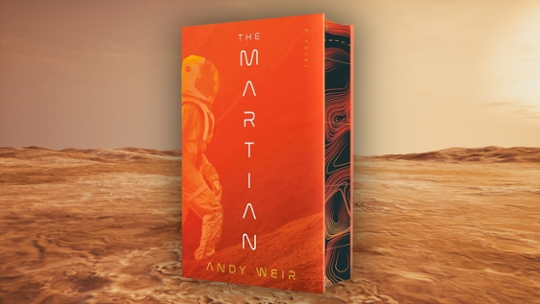
Andy Weir's 'The Martian' just got a deluxe edition to celebrate the book's 15-year anniversary, and it's a stunner
Space.com
Before 'Project Hail Mary,' Weir wrote the quintessential space saga now being given a stunning makeover.
 
Read the full article
 
'Voidverse' is a seriously weird space fantasy novel from 'The OA's' Damien Ober (interview)
Space.com
'For the atmosphere and world of 'Voidverse' to work, I needed the characters and the prose to meld with the setting.'
 
Read the full article


More Sci-Fi Content
 
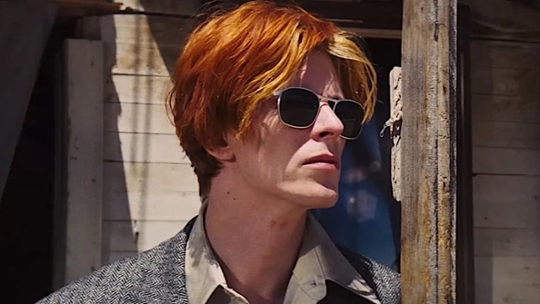
'The Man Who Fell To Earth' at 50: Was David Bowie’s strange stranded alien his best role ever?
Space.com
Maverick director Nicolas Roeg delivered a surreal sci-fi classic in 1976 that still resonates today.
 
Read the full article
 
 
Stay up-to-date on all things space science, news, and entertainment by subscribing to our newsletters.
Sign Up
 
 
Future Follow SPACE X Facebook Instagram Youtube
Contact Us: Feedback | Advertise
Sign Up | Update Profile | Unsubscribe
Privacy Policy | Cookies Policy | Terms and Conditions
When you purchase through links in our content, we may earn an affiliate commission.
 
Future US LLC ©
Full 7th Floor, 130 West 42nd Street, New York, NY, 10036

No comments:

Post a Comment