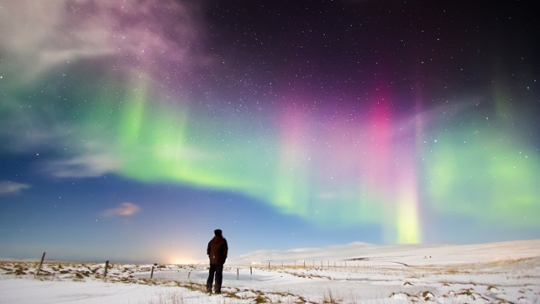
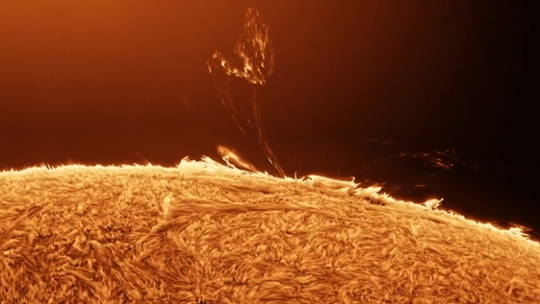
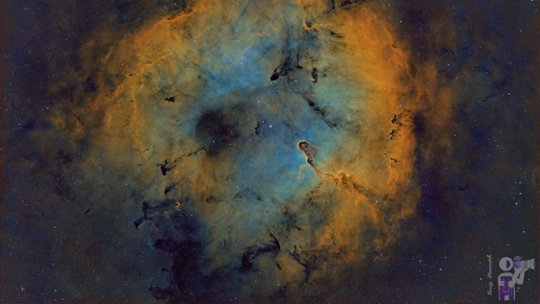
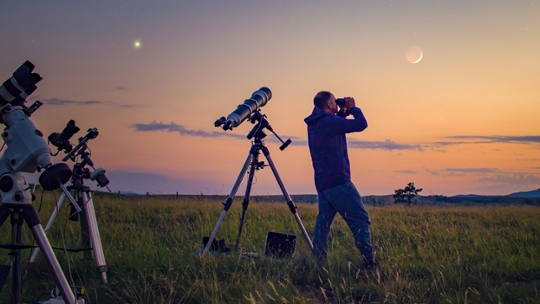
| | Created for znamenski.spacecom@blogger.com | Web Version | | | |  The night sky has plenty to offer this week, from a half-moon buzzing the Beehive Cluster to the Northern Taurids offering up impressive fireballs for lucky stargazers. Jupiter begins its retrograde motion, appearing to drift backward among the stars, while the Double Cluster dazzles binocular viewers late into the night.
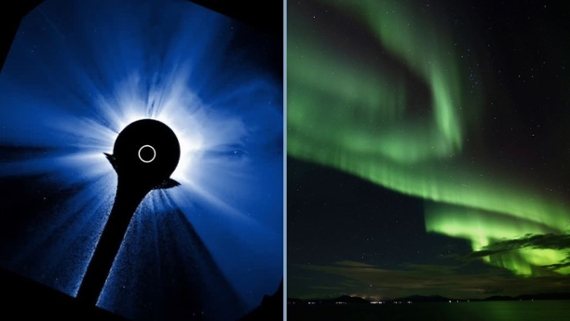
In this week's newsletter, we are also sharing some spectacular cosmic captures: a breathtaking astrophoto of the Elephant Trunk Nebula, a short timelapse showing solar plasma dancing above the sun in incredible detail and a science feature debunking rumors that interstellar Comet 3I/ATLAS has changed color.
Here's what's up this week.
Clear skies,
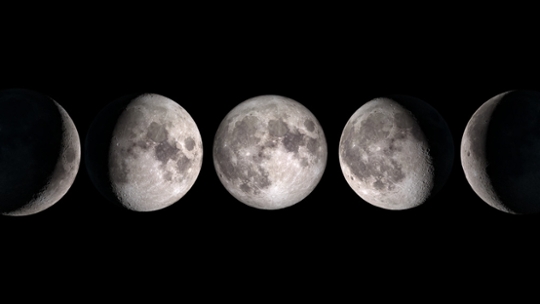
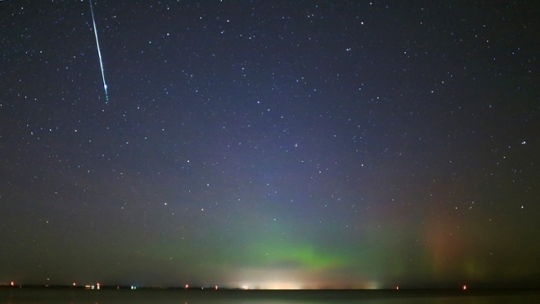
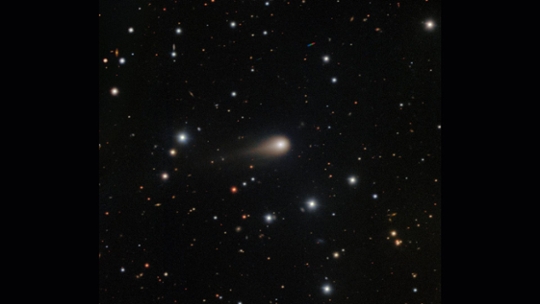
Daisy Reference Editor, Space.com | | 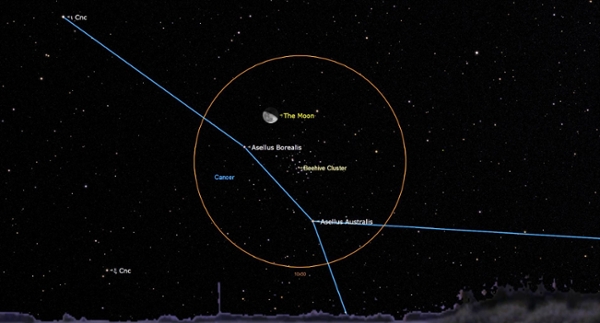 | | (Starry Night) | The waning gibbous moon rises beside the Beehive Cluster (Messier 44) tonight. Both will be visible with binoculars, though the moon's glare will hide the fainter "bees". | | 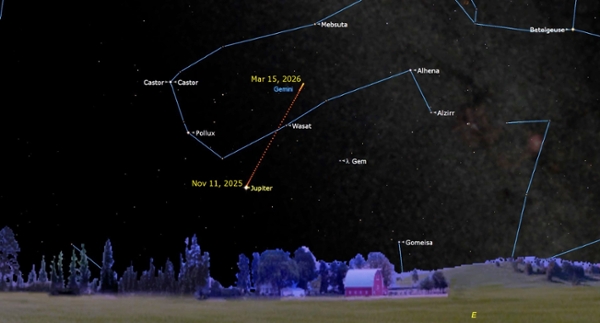 | | (Starry Night) | Jupiter halts its eastward path below Gemini's Pollux and begins a retrograde loop lasting until March. | | 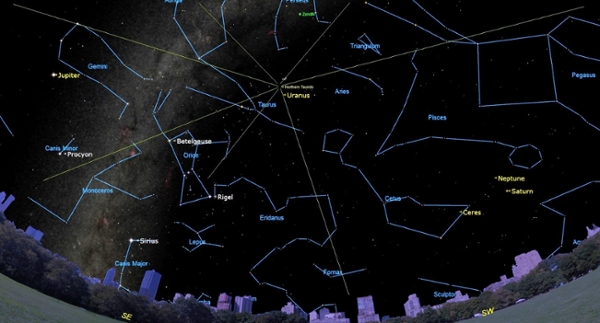 | | (Starry Night) | The Northern Taurids peak tonight, offering about five meteors per hour. The bright moon will wash out fainter streaks, but slow, colorful fireballs may still appear. | | 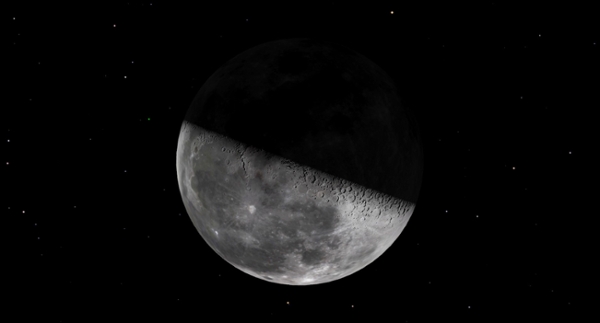 | | (Starry Night) | The third quarter moon rises around midnight, glowing half-lit on its western side. Dark, moonless evenings that follow are ideal for spotting fainter galaxies. | | 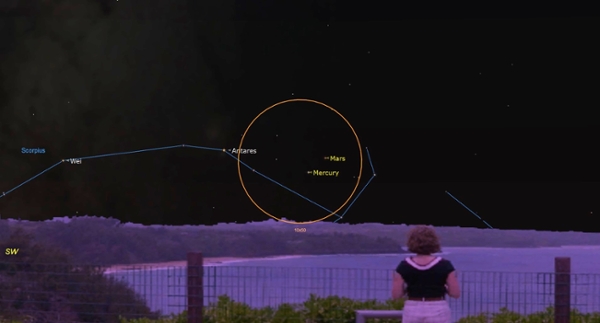 | | (Starry Night) | At southerly latitudes, Mercury passes less than two degrees from Mars low in the twilight hours. The pair is tricky to spot from mid-latitudes, but it's worth a try. | | 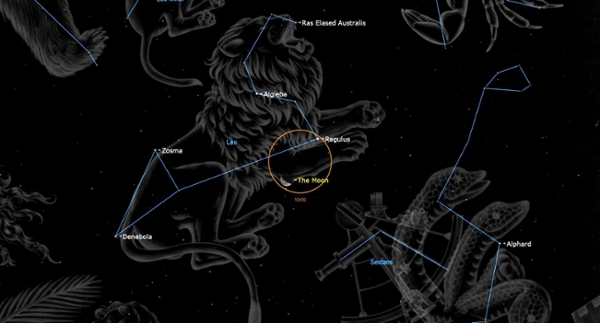 | | (Starry Night) | In the early morning, the crescent moon shines close to Regulus in the constellation Leo. The pair will fit within a binocular view. | | 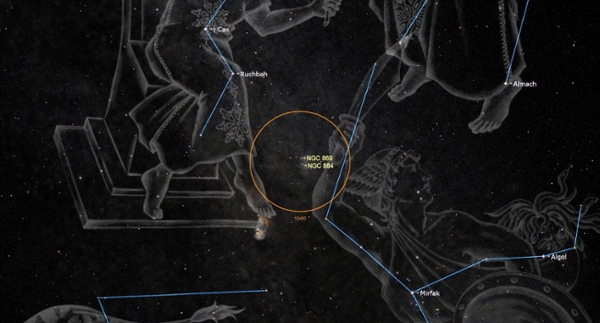 | | (Starry Night) | Look northeast to spot the Double Cluster between Perseus and Cassiopeia, two glittering clusters of stars side by side. They look spectacular in binoculars or a small telescope. | | | The third quarter moon on Nov. 12 marks the start of a week of darker skies, perfect for deep-sky observing. This half-lit phase rises around midnight and sets after sunrise. Want to explore more? Check out our ultimate guide to observing the moon for tips and tools to get the most out of each phase. | | | | The Taurid meteor shower is composed of two streams known as the Southern Taurids and the Northern Taurids. We explore this impressive shower in more detail here. | | | | While media outlets have reported that curious interstellar comet 3I/ATLAS has changed color, the scientists behind a recent study say that isn't actually the case. | | | | The latest aurora forecast for tonight help you make sure you're in the right place at the right time to see the northern lights. | | | | Astrophotographer Mark Johnstron captured a mesmerizing cloud of hydrogen plasma dancing above the sun's limb in this breathtaking video. | | | The Elephant's Trunk Nebula is located 2,400 light-years from Earth in the constellation Cepheus. | | | | Astronomy Kit and Accessories | | These are the best telescopes for stargazing and astronomy. Stay tuned for Black Friday on Nov. 28 | | | Unistellar is cutting 20% off all of its smart telescopes and accessories, including the Odyssey Pro and the eQuinox 2 for the whole month of November, ahead of Black Friday on Nov. 28. | | | | Stay up-to-date on all things space science, news, and entertainment by subscribing to our newsletters. | |  | |  | Follow Night Sky This Week |  |  |  |  | | | | | Future US LLC © | | Full 7th Floor, 130 West 42nd Street, New York, NY, 10036. | | | | |