Monday, August 10, 2026

The Perseids peak hours after a breathtaking total solar eclipse darkens the skies over Europe

Plus Jupiter meets Mercury in the predawn sky!
Created for znamenski.spacecom@blogger.com | Web Version
 
August 10, 2026
FOLLOW US X Facebook Instagram YouTube
 
Night Sky This Week
Just Look Up! SIGN UP ⋅   SHARE
 
 
What's Up This Week?
 
Hello skywatchers!

Get ready for one of the most action-packed weeks of the skywatching year! 


We'll begin by hunting for rare "earth-grazing" Perseid shooting stars, before turning our gaze to the main event — a spectacular total solar eclipse that'll darken the skies over Greenland, Iceland and Spain on Aug. 12. 


The excitement of the eclipse is followed by the peak of the Perseid meteor shower overnight on Aug. 12-13, when up to a hundred shooting stars will brighten the summer sky in the pristinely dark night following the August new moon. After that the planets take center stage, as Venus dazzles furthest from the sun in its evening apparition and Jupiter takes a stroll with Mercury through the predawn sky.


Why not prepare for this week's madness by reading up on what to expect during each stage of the Aug. 12 total solar eclipse, where it's visible from and just how deep a partial eclipse will be seen by viewers in the U.S! We also delve into eclipse timings and discuss whether its possible to spot an aurora in the false twilight that falls in the path of totality, as the moon's disk fully covers the sun in the daytime sky.

Be sure to keep an eye on our total solar eclipse liveblog, where we'll be bringing you all the latest eclipse news along with live reports from the path of totality, as skywatching editor Daisy Dobrijevic watches the moon swallow the sun in the skies over Greenland from the deck of a HX Expeditions cruise ship and I catch totality as it unfolds low in the evening sky from central Spain.

Wishing you all clear skies,
Anthony Wood
Skywatching Writer, Space.com

 
Tuesday, Aug. 11: Perseid "earthgrazers" set the stage
(Jules-Pierre Malartre/Starry Night)
Tuesday, Aug. 11: Perseid "earthgrazers" set the stage
Head out in the late evening before the constellation Perseus rises high in the northeast, and keep your eyes peeled on the summer sky. You're on the lookout for "earthgrazers", a rare form of shooting star that skim our planet's atmosphere at a shallow angle, carving a relatively slow horizontal path while leaving long trails through the darkening sky.
 
Wednesday, Aug. 12: A total solar eclipse darkens the skies over Europe
(Jules-Pierre Malartre/Starry Night)
Wednesday, Aug. 12: A total solar eclipse darkens the skies over Europe

Millions across Greenland, Iceland and Spain will witness a spectacular total solar eclipse on Aug. 12, as the moon sweeps across the face of our parent star, hiding its disk from sight during the climactic phase of totality. Many more will see a dramatic partial solar eclipse, where the moon occults a part of the sun's disk, while stopping short of concealing it entirely. 

 
Thursday, Aug. 13 (predawn): The Perseids peak in moonless skies
(Jules-Pierre Malartre/Starry Night)
Thursday, Aug. 13 (predawn): The Perseids peak in moonless skies

The 2026 Perseid meteor power will reach peak activity overnight on Aug. 12-13. The best time to hunt for Perseids will be in the predawn hours of Aug. 13, when up to 100 shooting stars could be seen brightening the night sky as Earth passes through the densest section of the debris stream left behind by comet Swift-Tuttle.

 
Friday, Aug. 14: Venus enchants in the evening sky
(Jules-Pierre Malartre/Starry Night)
Friday, Aug. 14: Venus enchants in the evening sky

Venus will shine furthest from the sun in its current evening apparition at sunset on Aug. 14, when it'll appear as a stunningly bright "evening star" while shining low in the western sky, below the shimmering stars of the constellation Virgo.

 
Saturday, Aug. 15: Jupiter and Mercury take a predawn stroll
(Jules-Pierre Malartre/Starry Night)

Saturday, Aug. 15: Jupiter and Mercury take a predawn stroll

August has plenty of surprises yet to come, including a breathtaking meeting of Jupiter and Mercury in the predawn sky on Aug. 15. The planets will be separated by less than 1 degree in the hour preceding dawn, making for an incredible — if challenging — naked eye target as they hug the horizon in the glare of the rising sun. If you have access to a telescope you may even spot the dark shadow of the Jovian moon Io darkening the gas giant's cloud tops!


Moon Calendar
 
Space.com
Notable moon phase this week: The new moon

The next major moon milestone is the August new moon, which occurs at 1:37 p.m. EDT (1737 GMT) on Aug. 12. At this time, the moon's orbit will be perfectly aligned to carry it across the face of the sun in Earth's sky, triggering a total solar eclipse that will be visible across Greenland, Iceland and Spain. 

 
Read More


Meteor Shower Alert!
 
Space.com
Perseid meteor shower 2026 — When, where and how to see it
The Perseid meteor shower is one of the best shooting star displays of the year.
 
Read More


Solar Eclipse
 
a dark shadow blocks the sun
(Created in Canva Pro)
What time is the total solar eclipse on Aug. 12, 2026?
If you're planning to watch the total solar eclipse on Aug. 12, knowing exactly when to look up is crucial.
 
Read More
 
Space.com
Where will the total solar eclipse 2026 be visible from?
Find out where you can experience totality on Aug. 12, 2026, and which countries will experience a partial solar eclipse.
 
Read More
 
Space.com
Yes, North America gets a solar eclipse on Aug. 12. Here's where and when to see it
The Aug. 12 eclipse won't rival 2024's Great American Eclipse, but millions across the U.S. and Canada will still see the moon take a bite out of the sun.
 
Read More
 
Space.com
Here's what to expect from 5 stages of the total solar eclipse 2026
From first contact to totality and beyond, this is what will happen during each stage of the Aug. 12 total solar eclipse.
 
Read More
 
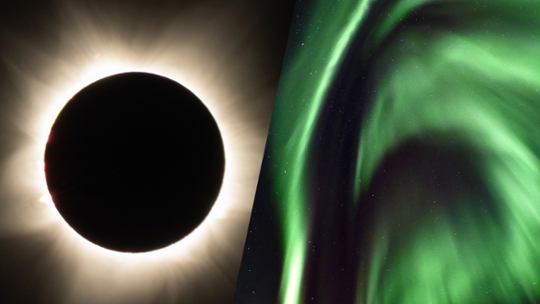
a solar eclipse and green wisps of light
(Left: Canva Pro. Right: Daisy Dobrijevic)
Could the northern lights be visible during the eclipse?
A total solar eclipse and the northern lights at the same time? Experts explain why it's possible, but the odds are stacked against it.
 
Read More
 
a dark shadow covers the sun
(Created in Canva Pro)
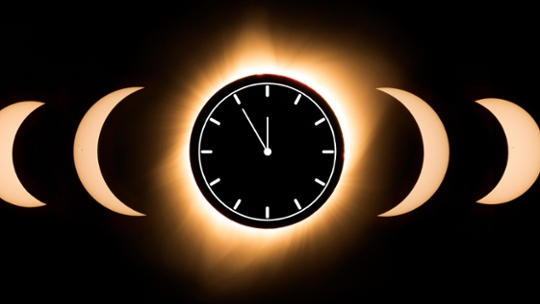
Total solar eclipse Aug. 12, 2026 live updates — 2 days to totality
Follow our live coverage of the total solar eclipse 2026 as we count down to eclipse day with the latest news, expert insight and updates before bringing you live reports from Greenland and Spain.
 
Read More


Astronomy Kit and Accessories
 
Space.com
Heading to Europe or the U.K. for the Aug. 12 solar eclipse? Best eclipse glasses to buy before you leave — or after you arrive
We've rounded up the best solar eclipse glasses so you can watch safely from wherever you are.
 
Read More
 
Space.com
Best solar viewing gear 2026: Observe the Aug. 12 solar eclipse in safety
The best solar viewing gear available for the next solar eclipse. Spy the best solar glasses, filters, telescopes and binoculars.
 
Read More
 
 
Stay up-to-date on all things space science, news, and entertainment by subscribing to our newsletters.
Sign Up


Future Follow Night Sky This Week X Facebook Instagram YouTube
Contact Us: Feedback | Advertise
Sign Up | Update Profile | Unsubscribe
Privacy Policy | Cookies Policy | Terms and Conditions
When you purchase through links in our content, we may earn an affiliate commission.
 
Future US LLC ©
Full 7th Floor, 130 West 42nd Street, New York, NY, 10036.