|
|
|
|
 |
 
 |
Happy Thursday, space fans
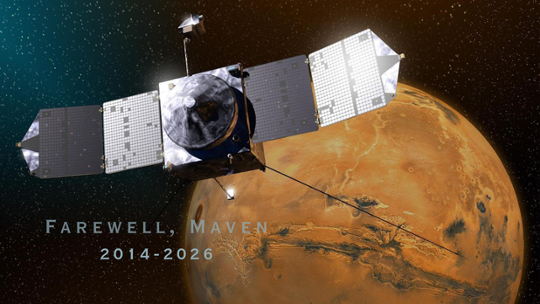
It's been an eventful couple of days in outer space! Yesterday, NASA officially declared its MAVEN Mars dead after many months of lost contact. The last time we heard from the Mars orbiter was on Dec. 6 when it sent out a signal to NASA's Deep Space Network before ducking behind the planet in its orbit. After an anomalous tumble, we lost contact and after months of trying to get it back, yesterday NASA finally called it. RIP MAVEN.
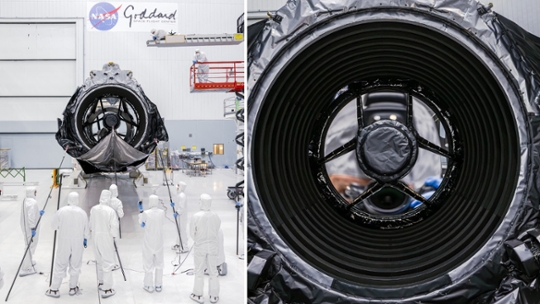
Beyond this loss, we saw some positive news for NASA's Nancy Grace Roman Space Telescope. It passed its final primary mirror checks with flying colors and the next time we see it, it will be in Florida, readying for launch. (And while NASA has said it will likely launch in early September, new information suggests it could be even earlier in late August). We also have an incredible new finding with a meteorite, some spectacular and surprising stellar activity, and SETI has officially weighed in on 3I/ATLAS (hint: it's not an alien spacecraft).
Check out what's big in space below!
|
|
|

|
NASA engineers completed their final inspection of the Roman telescope's primary mirror and are now preparing to ship the telescope to its Florida launch site.
|
|
|
A rare meteorite recovered from the Sahara Desert contains evidence of a long-lost moon-size world that existed just a few million years after the solar system formed.
|
|
|
|
After its rocket explosion, Blue Origin wants to complete repairs and put another New Glenn on the launchpad before the end of 2026, according to CEO Dave Limp. That's very ambitious.
|
|
|
|
A trio of major solar flares triggered radio blackouts across Earth and may spark impressive northern lights as possible solar storms head our way.
|
|
|
With the eclipse occurring near sunset over a complex landscape, eclipse chasers must do their research before the big moment on Aug. 12, 2026. Here's what to do.
|
|
|
|
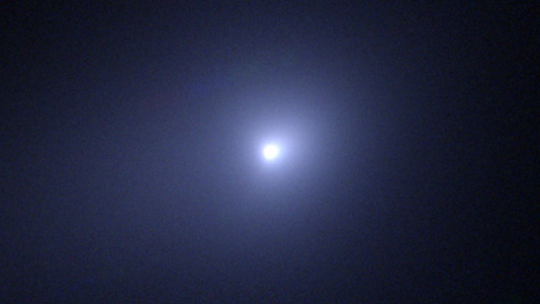
Scientists failed to find radio signals emanating from the interstellar comet 3I/ATLAS, further bolstering its status as a natural object, not one made by aliens.
|
|
|
|
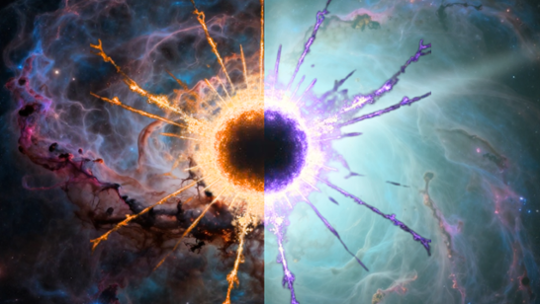
New research suggests primordial black holes born during the Big Bang could live much longer than previously estimated — long enough to become energy-spewing white holes.
|
|
|
|
A rainbow blanket of patchwork colors sprawls across South Africa in this new composite image created using data from NASA's latest Earth-observing mission.
|
|
|
|
One-and-done still hits the sweet spot with these (inter)stellar space shows.
|
|
|
That's it for our space update today
But stay tuned, as there is a lot of big space on the horizon. SpaceX has announced its intention to go public, a move that could make Elon Musk a trillionaire. This news arrived at the same time that the company launched a fresh crop of Starlink satellites into orbit — whether an intentionally-timed launch or not, it certainly added some pizzaz to the announcement.
More exciting than SpaceX making more money, however, is NASA's upcoming news. Next week, the agency will be announcing the astronauts who will fly on Artemis 3 — the next mission to the moon. This mission will be the last lunar mission before Artemis 4 lands astronauts on the moon. We have some guesses on who will be on the rocket, but what do you think? Let us know!
Ad astra, per aspera
Chelsea Gohd
Content Manager, Space.com
|
|
|
| Stay up-to-date on all things space science, news, and entertainment by subscribing to our newsletters. |
|
 |
|
|
|
|
|
When you purchase through links in our content, we may earn an affiliate commission.
Future US LLC © |
| Full 7th Floor, 130 West 42nd Street, New York, NY, 10036 |
|
|
|