Monday, July 21, 2025

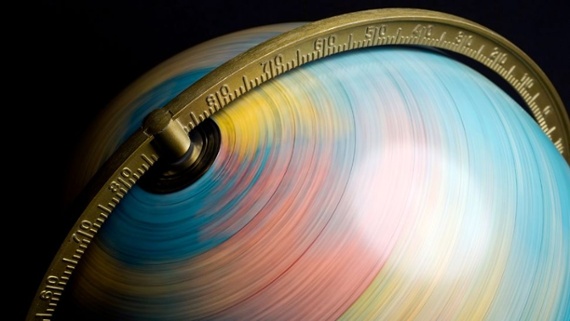
2nd shortest day in history is tomorrow

Happy Monday space fans! | Earth spins faster July 22 creating 2nd-shortest day | This wild bioplastic just aced a Mars pressure test
Created for znamenski.spacecom@blogger.com | Web Version
July 21, 2025
CONNECT WITH SPACE.COM FacebookXInstagramYoutube
Space.com
Something amazing every day.SIGN UP ⋅   WEBSITE
 
The Launchpad

It's a busy day as we get underway to bring you all things space news and science. Mark your calendars as tomorrow is the second shortest day in history, thanks to the Earth spinning slightly faster. It'll only be faster by 1.34 milliseconds less than the standard 24 hours — not something you'll notice — but it's part of a puzzling trend in Earth's rotational behavior that has been unfolding in recent years.

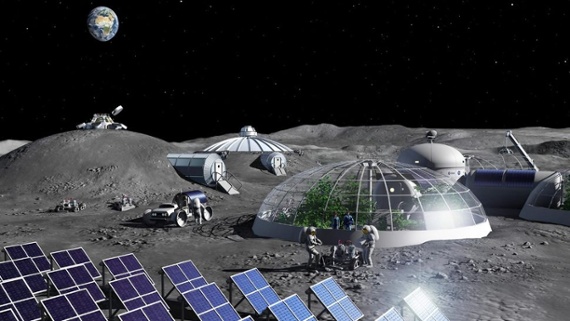
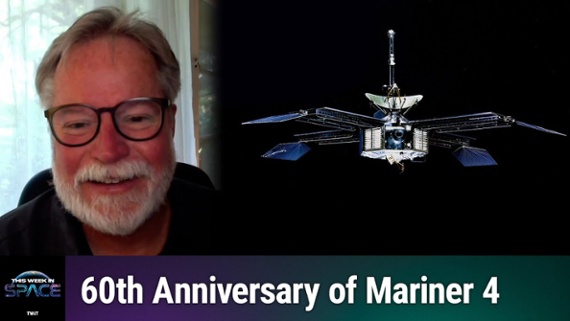
Other stories for today include South Korea planning to build a moon base by 2045, two NASA Mars probes preparing for launch on Blue Origin's huge New Glenn rocket, and a new "This Week in Space" podcast episode all about the 60th anniversary of Mariner 4. 

We have all that and more for your daily read. 

Thanks for exploring with us.

Keep looking up, 

Kenna 

Content Manager, Space.com
Earth spins faster July 22 creating 2nd-shortest day
Our planet has been rotating at its fastest since records began in 1973.
Read More
This wild bioplastic just aced a Mars pressure test
"As this type of technology develops, it's going to have spinoff benefits for sustainability technology here on Earth as well."
Read More
Space quiz: What year was the Korea AeroSpace Administration (KASA) founded?
Click here for the answer!
Vote2020
Vote1995
Vote2024
Vote1987
Space Deal of the Day
Streaming deals: Watch great sci-fi content for less
These are the best streaming deals on the market, so you can watch upcoming sci-fi movies and shows or relive the classics without breaking the bank.
Read More
Skywatching
10 unique tours for 2027 'eclipse of the century'
From "Star Wars" film sets to baboons in Saudi Arabia, here's how to experience the "eclipse of the century" in style on Aug. 2, 2027.
Read More
Spaceflight
South Korea wants to build a moon base by 2045
The planned lunar outpost is part of the nation's newly revealed exploration road map.
Read More
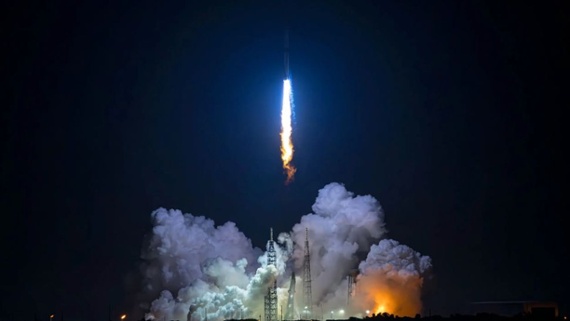
Twin NASA Mars probes will fly Blue Origin's rocket
The launch of NASA's ESCAPADE mission could take place as soon as Aug. 15.
Read More
Science & Astronomy
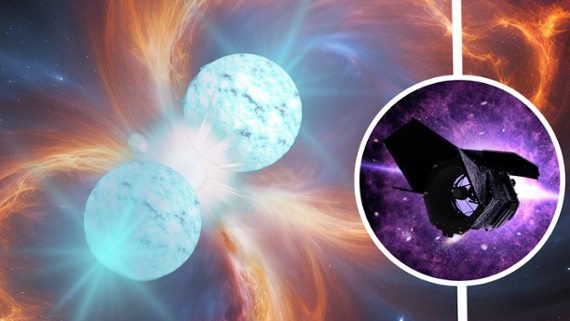
Roman Telescope may find 100,000 new explosions
"Whether you want to explore dark energy, dying stars, galactic powerhouses, or probably even entirely new things we've never seen before, this survey will be a gold mine."
Read More
Entertainment
'This Week In Space' podcast: Episode 169: Mars
It's the 60th Anniversary of Mariner 4
Read More
Today in Space
On this day: Gus Grissom is 2nd American in space
Grissom barely made it out alive, despite having a successful flight.
Read More
Image of day: ISS astronauts collect blood for study
This process is part of a larger project looking at studying how being in space affects the human body.
Read More
 

New Moon Arrives, Jupiter Shines, and Pluto Hits Opposition

A crescent moon bookends the week, while Pluto reaches peak visibility far beyond the sun.
Created for znamenski.spacecom@blogger.com | Web Version
July 21, 2025
CONNECT WITH NIGHT SKY THIS WEEKFacebookXInstagramYouTube
Night Sky This Week
Just Look Up!SIGN UP ⋅   SHARE
 
What's Up This Week?
Hello Skywatchers!

This week offers a serene mix of moon phases, planetary pairings, and a distant milestone. It begins with a razor-thin crescent moon pairing with Jupiter before sunrise on Wednesday, and ends with the young moon shining next to Regulus after sunset on Saturday. In between, Thursday brings the new moon, the darkest skies of the month, and on Friday, distant Pluto reaches opposition, marking its brightest (if still incredibly faint) appearance of the year. From pre-dawn photo ops to deep-sky challenges, the cosmos offers something for every skywatcher this week.

Here's what to watch for this week.

Clear skies,

Daisy

Reference Editor, Space.com

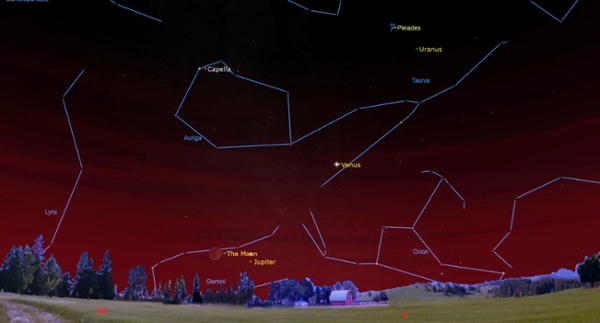
Wednesday, July 23 — Sliver of Moon Meets Jupiter (pre-dawn)
(Starry Night)

Look east before sunrise to see a delicate crescent moon just 2.5% illuminated, shining about 5 degrees to the left of brilliant Jupiter. The pair will fit together in binoculars, making for a lovely early morning view.

Full Story: Space (10/1) 
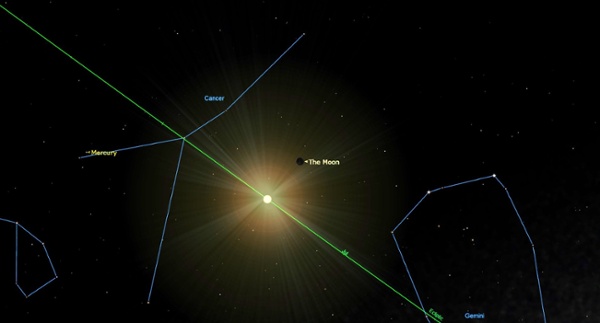
Thursday, July 24 — New Moon
(Starry Night)

The moon reaches its new phase at 3:11 p.m. EDT (19:11 GMT), disappearing from view as it aligns between Earth and the sun. Enjoy moonless skies in the evening, perfect for stargazing or hunting faint galaxies.

Full Story: Space (10/1) 
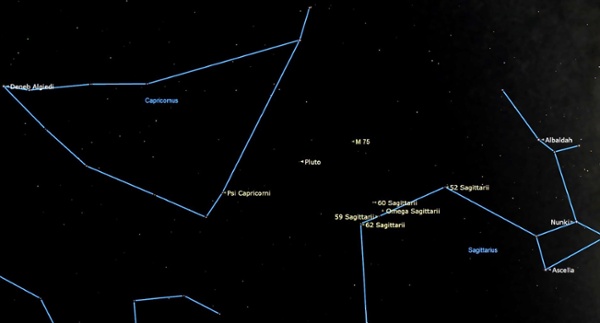
Friday, July 25 — Pluto at Opposition (all night)
(Starry Night)

Tiny Pluto reaches opposition, sitting directly opposite the sun as viewed from Earth. It's at its closest and brightest for the year, but still incredibly faint at magnitude +14.4, visible only with large telescopes. It's currently in Capricornus, near Psi Capricorni and Messier 75.

Full Story: Space (10/1) 
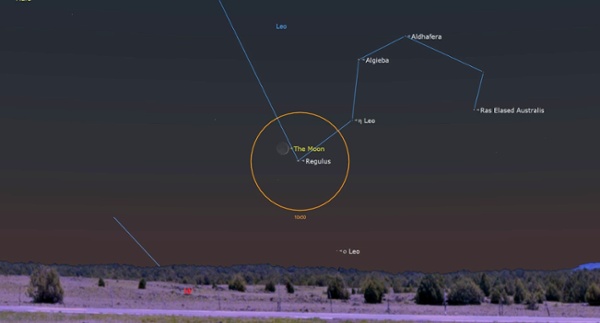
Saturday, July 26 — Slim Crescent Moon Near Regulus (after sunset)
(Starry Night)
After sunset, a slender crescent moon appears low in the western sky. Look closely to spot Regulus, Leo's brightest star, just to its lower right. Binoculars offer the best view, especially from tropical latitudes.
Full Story: Space (10/1) 
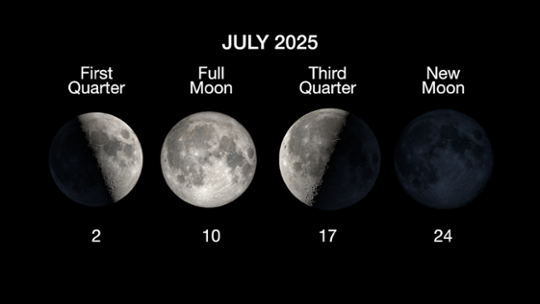
Moon Calendar
Space.com

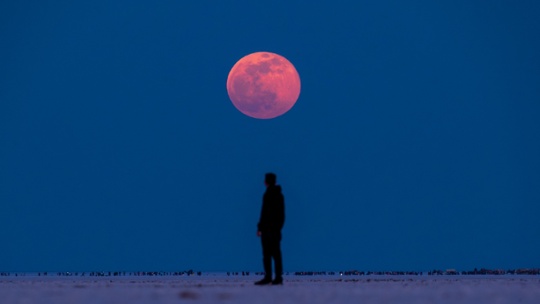
The new moon arrives on Thursday, July 24, marking the start of a fresh lunar cycle. With the moon completely hidden in the sun's glare, this is the best time of the month for deep-sky observing. After the new moon, a young crescent will return to the evening sky, ideal for early-evening viewing and astrophotography.

Want to explore our lunar neighbor in more detail? Check out our ultimate guide to observing the moon.

 
Full Story: Space (2/22) 
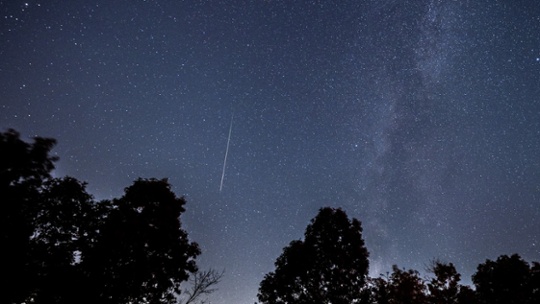
Meteor Shower Alert!
Space.com
Each summer, skywatchers around the world look forward to the famous Perseid meteor shower, but often overlook four lesser showers that peak between July 29 and Aug. 16.
Read More
Total Lunar Eclipse
Space.com
The second total lunar eclipse of 2025 will be visible from Asia and western Australia on Sept. 7-8, 2025.
Read More
In The News
Space.com
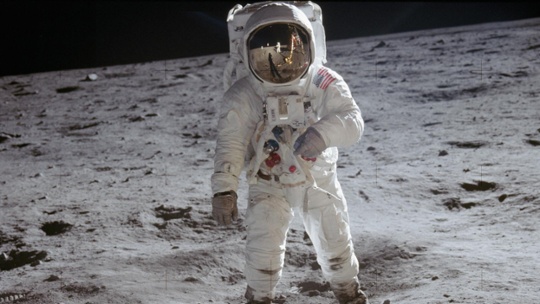
Find the locations of the five landing zones considered as the setting for humanity's first steps on another world.
Read More
Northern Lights Forecast
Space.com
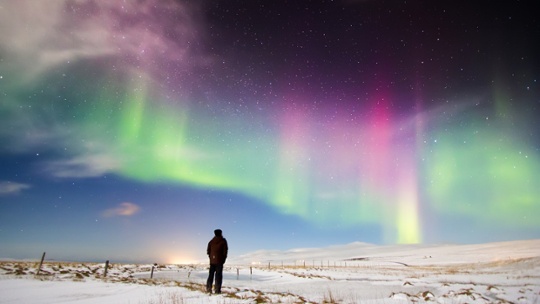
The latest aurora forecast for tonight help you make sure you're in the right place at the right time to see the northern lights.
Read More
Your Amazing Astrophotos
Space.com
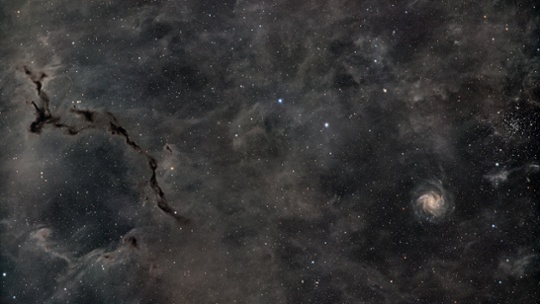
10 supernova explosions have been seen brightening the Fireworks Galaxy over the past century.
Read More
Astronomy Kit and Accessories
Space.com
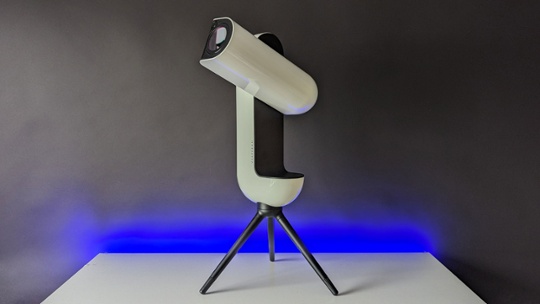
All of the telescopes here are easy to set up on a tabletop, making them an easy option for beginners and professional stargazers.
Read More
Space.com
Here are the best star projectors to enjoy a night-sky experience from the comfort of your couch. The prices are often reduced on special occasions, such as Amazon Prime Day, so keep your eyes open.
Read More