
|
| Created for znamenski.spacecom@blogger.com | Web Version |
|
|
|

The November full moon dazzles on Nov. 24 as the first in a string of four consecutive supermoons rises to flood the night sky with a spectacular display of natural light, but that doesn't mean there isn't more to see!
We'll hunt for stellar wonders and watch as Venus pierces the moonlight veil, while appreciating a strange tadpole-like feature marking the lunar disk where the sun's radiation is being influenced by the moon's natural magnetism.
Here's what to watch for this week.
Clear skies,
Anthony Wood
Skywatching Writer, Space.com
|
|
 |
| (Jules-Pierre Malartre/Starry Night) |
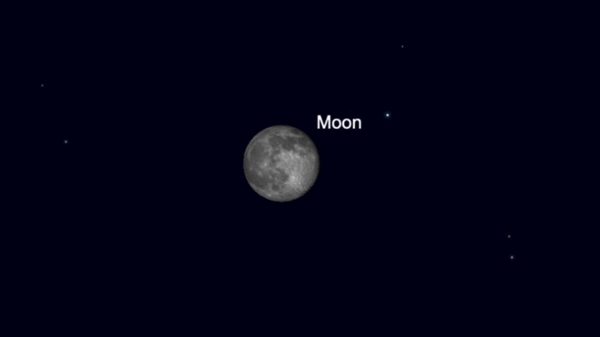
The moon will be below the horizon when it turns full for viewers in the U.S. at 9:53 a.m. EST (1453 GMT) on Nov. 24. But the lunar disk will appear full to the naked eye in the predawn hours of Nov. 24 as it shines close to the Pleiades in the western sky and that evening when it rises in the east at sunset.
November's full moon occurs as the natural satellite passes within 90% of perigee — when it is closest to Earth in its elliptical orbit — giving rise to a dazzling supermoon that can be 30% brighter and 14% larger than the smallest full moon of the year.
|
|
 |
| (Jules-Pierre Malartre/Starry Night) |
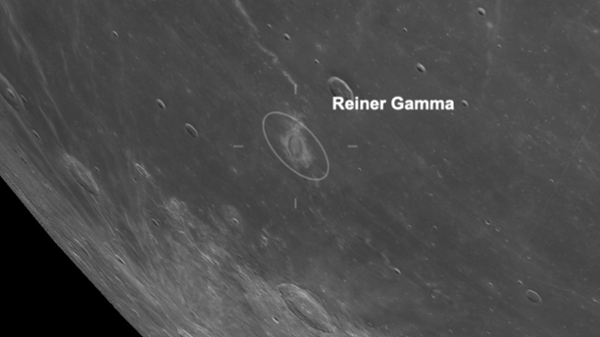
Sweep a 6-inch telescope across the dark lunar sea Oceanus Procellarum on the western side of the Earth-facing lunar disk.
Our target is a tadpole-like collection of bright swirls known as Reiner Gamma, which formed as a magnetic bubble diverted solar wind particles, triggering chemical reactions in distinct patterns large enough to be seen from Earth while leaving other regions relatively untouched by the sun's 'tanning' influence.
|
|
 |
| (Jules-Pierre Malartre/Starry Night) |
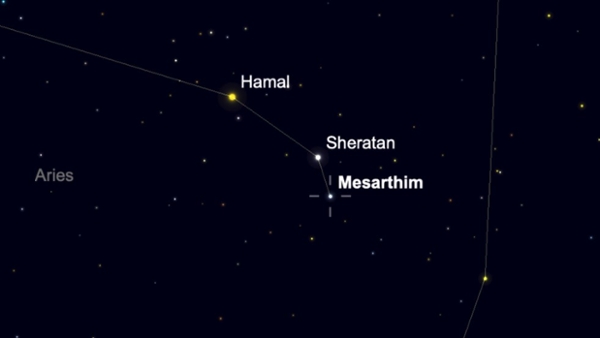
Find the constellation Aries, "The Ram," glowing above the eastern horizon at sunset, close to the stars of the Pleiades open cluster. The bright, star-like light of the binary system Mesarthim can be found shining at one end of the stellar grouping.
A small 4-inch telescope at 100x magnification will help split Mesarthim into two brilliant white stars of near-identical brightness and color.
|
|
 |
| (Jules-Pierre Malartre/Starry Night) |
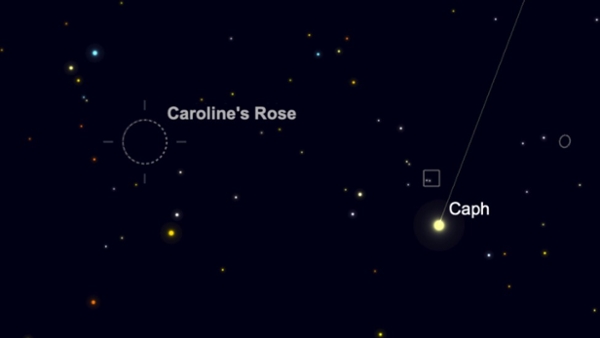
Find the "W" star formation of the constellation Cassiopeia glowing in the northeastern evening sky on Nov. 28 and sweep a pair of binoculars around the bright star Caph until you find the hazy light of the open star cluster NGC 7789.
Viewing the cluster through the eyepiece of a telescope will reveal swirls of stars reminiscent of the petals of a flower. It's often known as Caroline's Rose, after the 18th-Century astronomer Caroline Lucretia Herschel, who discovered the pack of gravitationally-bound stars glowing 8,000 light-years from Earth.
|
|
 |
| (Jules-Pierre Malartre/Starry Night) |
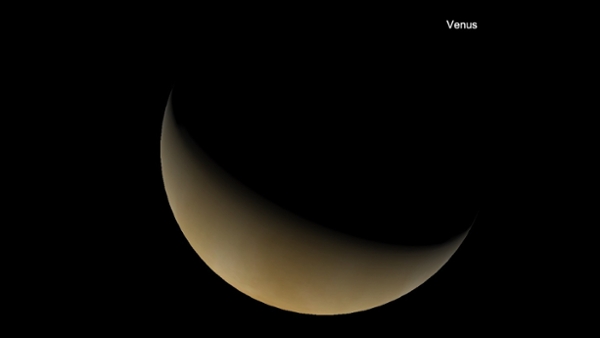
Notice a dazzling light on the eastern horizon before sunrise? That's the inner planet Venus, which shines at its most brilliant in its current morning apparition late this week. Check that the sun is safely below the horizon before pointing a telescope at Venus to spot its crescent disk shining in the night sky.
|
|
|
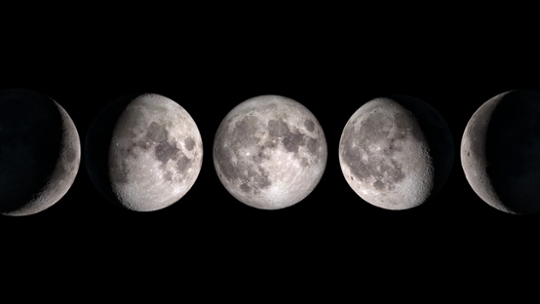
The November full moon occurs at 9:53 a.m. EST (1453 GMT) on Nov. 24. Viewers in the U.S. will get their best view of November's moon when it rises over the eastern horizon at sunset. November's full moon is often known as the "Beaver Moon" because it rises around the time that the small mammals are particularly active as they prepare for the coming winter.
November's full moon will occur as the barren satellite passes close to Earth in its elliptical orbit, setting the stage for a gorgeous supermoon that will appear particularly large while close to the horizon.
|
|
|
|
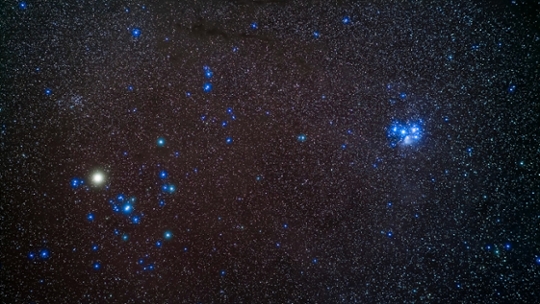
Aldebaran looks for all the world like the brightest member of the Hyades star cluster. It isn't — and discovering why changes the way you look at constellations.
|
|
|
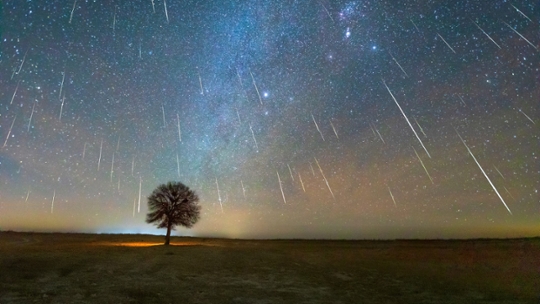
The Geminid meteor shower peaks the night of Dec. 13-14. Our guide tells you where and how to see them.
|
|
|
|
The longest total solar eclipse on land this century promises to be the experience of a lifetime, but watching it from Luxor, Egypt, may not be straightforward. What could go wrong? Quite a lot, actually.
|
|
|
A biblical mystery, an ancient Egyptian inscription and a "ring of fire" solar eclipse 3,200 years ago hold clues to when Ramesses the Great ruled.
|
|
|
|
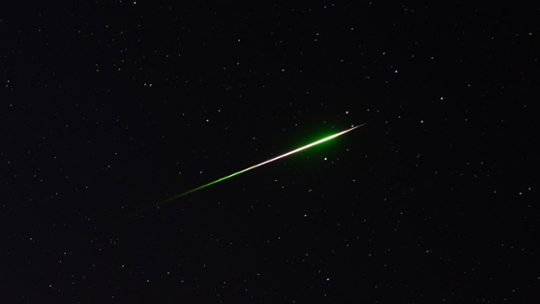
From colorful meteors to lingering trails, the Leonids put on a great show this year.
|
|
|
| Astronomy Kit and Accessories |
|
|
We've scoured the net for the best Black Friday and Cyber Monday deals on space-related gear, from telescopes to cameras and more.
|
|
|
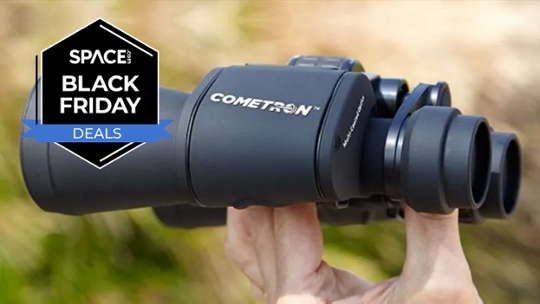
For Black Friday week, Amazon has slashed the price of these budget family binoculars down to $36, their lowest price since April. They are great for viewing the moon and constellations.
|
|
|
| Stay up-to-date on all things space science, news, and entertainment by subscribing to our newsletters. |
|

|
|
 |
Follow Night Sky This Week |
 |
 |
 |
 |
|
|
|
When you purchase through links in our content, we may earn an affiliate commission.
Future US LLC © |
| Full 7th Floor, 130 West 42nd Street, New York, NY, 10036. |
|
|
|
|





No comments:
Post a Comment