 |
| Created for znamenski.spacecom@blogger.com | Web Version |
|
|
|

The first week of August has a bonanza of skywatching targets in store, kicking off on Monday with Comet 10P/Tempel's closest approach to Earth, followed by a hunt for Perseid shooting stars as we plunge deeper into the stream of debris left by Comet Swift-Tuttle.
We'll also have a pair of dazzling lunar rendezvous as the lunar disk sidles up to the Red Planet and the blue-white stars of the Pleiades ahead of its new moon phase on Aug. 12, which will herald the onset of a spectacular total solar eclipse!
That's not all! We also have a roundup of the best planets to see in August and tips on how to find a hidden feature lurking in the Milky Way. And be sure to refresh yourself on how to safely watch each stage of a total solar eclipse before the moon swallows the sun in the skies over Greenland Iceland and Spain next week.
Clear skies,
Anthony Wood
Skywatching Writer, Space.com
|
|
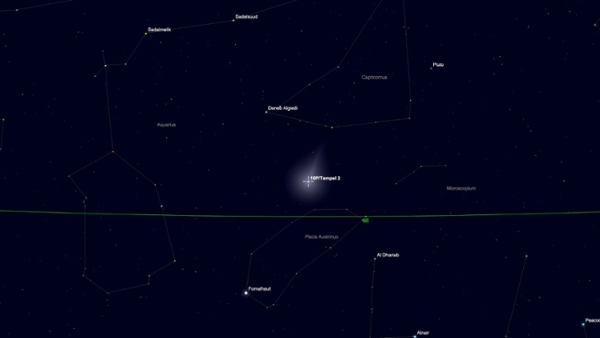 |
| (Jules-Pierre Malartre/Starry Night) |
The icy comet 10P/Tempel draws closest to Earth in its current orbit on Aug. 3, passing 61 million miles (100 million kilometers) from our planet as it travels through the stars of the constellation Piscis Austrinus.
At magnitude +8.6, it's too dim to spot with the naked eye, but a telescope or a pair of good binoculars may allow you to spot the comet — though the glow of the waning gibbous moon will make it more of a challenge!
|
|
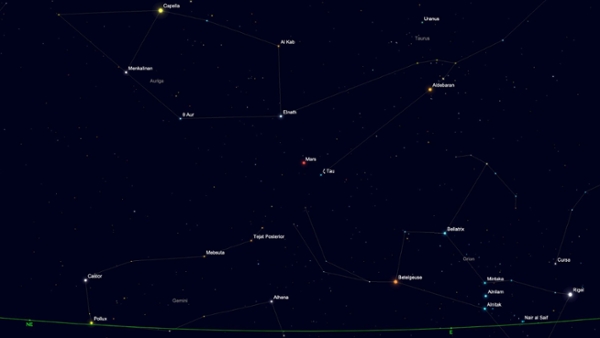 |
| (Jules-Pierre Malartre/Starry Night) |
Look to the eastern sky in the early hours of Aug. 4 to see the red light of Mars shining between Elnath and Zeta Tauri — the bright stars that represent the horns of the celestial bull in the constellation Taurus. As an added bonus, why not try to spot Mercury's steady light as it rises over the eastern horizon in the hour preceding dawn?
|
|
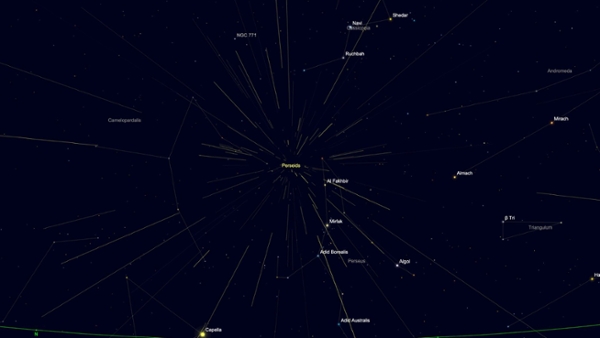 |
| (Jules-Pierre Malartre/Starry Night) |
The Perseid meteor shower may not peak until Aug. 12, but there's plenty of shooting stars to be seen before then as Earth ploughs ever deeper into the debris trail left by Comet Swift-Tuttle! Head somewhere dark in the late evening and allow 20 minutes for your eyes to adjust. The hourly rates are still low, but with perseverance and dark skies you could well spot your first Perseid of the season.
|
|
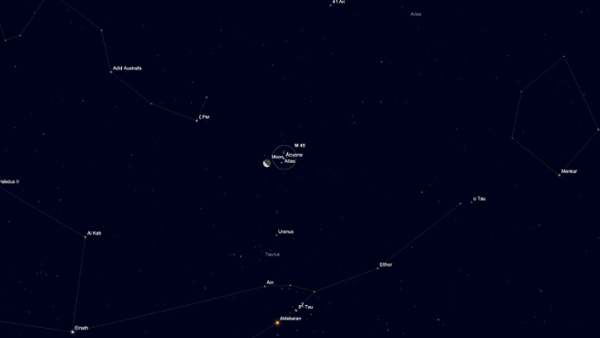 |
| (Jules-Pierre Malartre/Starry Night) |
Stargazers in the U.S. are in for a spectacular sight in the early hours of Aug. 7, as the waning crescent moon passes directly in front of the blue-white stars of the Pleiades in the eastern sky.
|
|
 |
| (Jules-Pierre Malartre/Starry Night) |
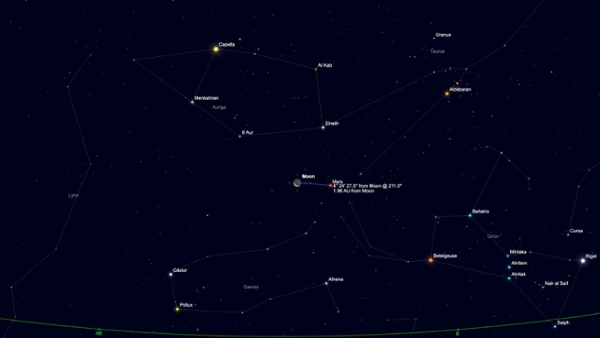
Don't miss the delicate form of the 14%-lit crescent moon glowing just 5 degrees to the left of Mars in the eastern sky early on Aug. 9. You may also notice a subtle glow infusing the night side of the moon, where sunlight bounces off Earth's surface and atmosphere to illuminate its natural satellite.
|
|
|
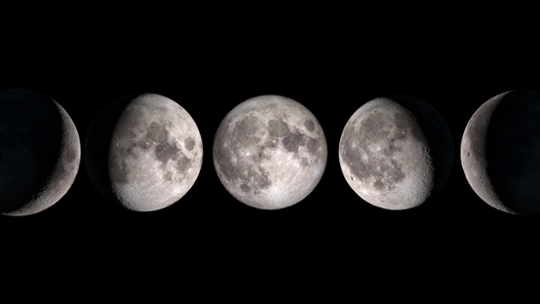
The next major moon milestone is the third quarter moon, which occurs at 10:21 p.m. EDT on Aug. 5 (0221 GMT on Aug. 6). At this time, the lunar disk will appear with its left half lit and its right side veiled in shadow when it rises around midnight local time.
It's an excellent time to observe deep shadows darkening the western rims of craters located close to the terminator separating night from day. Tycho crater makes for a particularly ominous sight in the broken terrain to the south of the equator around the third quarter phase, with its interior hidden beneath an impenetrable pool of shadow.
|
|
|
|
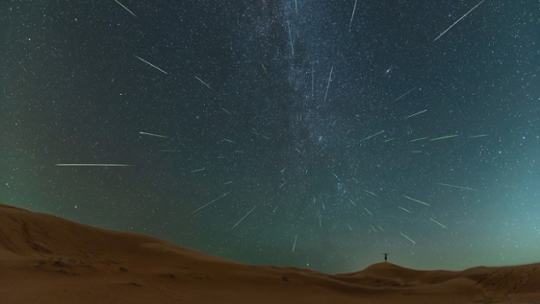
The Perseid meteor shower is one of the best shooting star displays of the year.
|
|
|
|
Venus dominates the evening sky while Mercury and Jupiter stage a beautiful dawn pairing you won't want to miss.
|
|
|
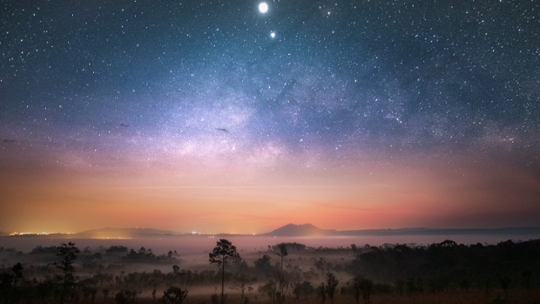
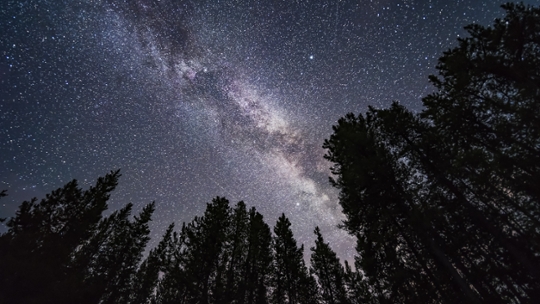
Summer is the ideal time to look for the Great Rift, a long series of dark dust clouds that appear to split the Milky Way from Cygnus through Sagittarius.
|
|
|
|
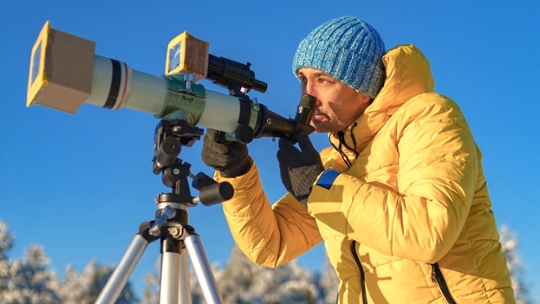
You can always grab a pair ahead of the next solar eclipse!
|
|
|
| Astronomy Kit and Accessories |
|
|
We've rounded up the best solar eclipse glasses so you can watch safely from the UK.
|
|
|
The best solar viewing gear available for the next solar eclipse. Spy the best solar glasses, filters, telescopes and binoculars.
|
|
|
| Stay up-to-date on all things space science, news, and entertainment by subscribing to our newsletters. |
|
 |
|
 |
Follow Night Sky This Week |
 |
 |
 |
 |
|
|
|
When you purchase through links in our content, we may earn an affiliate commission.
Future US LLC © |
| Full 7th Floor, 130 West 42nd Street, New York, NY, 10036. |
|
|
|
|




No comments:
Post a Comment