Send Seminars mailing list submissions to seminars@itp.ac.ru To subscribe or unsubscribe via the World Wide Web, visit https://mailman.itp.ac.ru/mailman/listinfo/seminars or, via email, send a message with subject or body 'help' to seminars-request@itp.ac.ru You can reach the person managing the list at seminars-owner@itp.ac.ru When replying, please edit your Subject line so it is more specific than "Re: Contents of Seminars digest..." Today's Topics: 1. Friday 27.11.2026 (info+seminars@itp.ac.ru) 2. Thursday 26.11.2026 - ITP/CAS Colloquium (info+seminars@itp.ac.ru) ---------------------------------------------------------------------- Message: 1 Date: Tue, 24 Nov 2026 07:02:01 +0000 From: info+seminars@itp.ac.ru To: staff@itp.ac.ru, students@itp.ac.ru, seminars@itp.ac.ru Subject: [Landau ITP Seminars] Friday 27.11.2026 Message-ID: <3Wdj7bOI6Ye237Q0gmmSgtw9ilXEOABJTTGVgCl7kc4@wwwserv2> Content-Type: text/plain; charset=UTF-8 Уважаемые коллеги! На заседании Ученого совета ИТФ в пятницу 27.11 будут заслушаны 3 доклада: 11:30 V.P.Mineev Berry Curvature Effect in Anomalous Transport The Berry curvature effect in anomalous transport driven by statistical forces such as the gradient of temperature or chemical potential has been developed by Di Xiao et al in Phys. Rev. Lett. 97, 026603 (2006). This theory operates with spinless fermions. So, the Berry curvature, corresponding magnetic moment of wave packets and the magnetic field dependent density of states originate from the electron orbital degrees of freedom. We present an alternative derivation of the Berry curvature effect on charge, heat and as well on thermalelectric currents in altermagnets and noncentrosymmertric metals where the electron band dispersion possesses spin dependent band splitting. Chinese Phys. Lett. 43, 110710 (2026). 12:10 V.P.Mineev Altermagnets versus Antiferromagnets Altermagnets are substances with a momentum-dependent spin splitting of electron bands due to a specific crystal structure that is invariant under time reversal only in combination with rotations and reflections. The developed phenomenological approach allows to obtain a spectrum of electron bands in altermagnets corresponding to their magnetic group symmetry. We consider antiferromagnetic, weak ferromagnetic, and ferrimagnetic structures. The calculated Berry curvature of electron bands in the altermagnet with zero spontaneous magnetisation occurs an odd function of momentum components whereas it is even in a weak ferromagnetic state. The Berry curvature in ferrimagnetic state consists of sum of even and odd terms. 12:50 V.P.Mineev Band splitting in the altermagnet CrSb The band spin splitting in the hexagonal altermagnet CrSb is established using the magnetic group formalism that allows to find the additional spin splitting missed in the frame of the exchange approximation. Phys.Rev.B 114, 065130 (2026). ID и пароль онлайн-трансляций в Zoom те же, что и для предыдущих трансляций семинаров и докладов на Ученом совете: https://zoom.us/j/96899364518?pwd=MzBsR2lYT0lYL2x2b1oyNU9LeWlWUT09 Meeting ID: 968 9936 4518 Пароль: 250319 ------------------------------ Message: 2 Date: Tue, 24 Nov 2026 07:02:01 +0000 From: info+seminars@itp.ac.ru To: staff@itp.ac.ru, students@itp.ac.ru, seminars@itp.ac.ru Subject: [Landau ITP Seminars] Thursday 26.11.2026 - ITP/CAS Colloquium Message-ID: <2ceEcemy2LeRmNhPcMkk55NLGBLv0SP1nGbuzALdko@wwwserv2> Content-Type: text/plain; charset=UTF-8 Уважаемые коллеги! На онлайн коллоквиум по теоретической физике в четверг 26.11 будут заслушаны 2 доклада: 1) 10:00:00 по московскому времени: Kai Chang (Zhejiang University) Exciton Insulator Phases in 2D Systems In recent years, excitons, neutral quasiparticles in two-dimentional systems, have garnered significant attention owing to their distinctive electronic configurations and promising quantum phenomena. These composite particles manifest a new quantum phases in 2D systems, notably the exciton insulator state initially proposed by Prof. Mott in 1961, which emerges when exciton binding energy exceeds the single-particle bandgap. Through BCS-like thoretical frameworks, we establish the existence of topological exciton insulating phases in 2D semiconductor systems. Focusing on two representative systems-InAs/GaSb quantum wells and van der Waals heterostructures-we reveal critical phase transitions. For InAs/GaSb quantum wells (intrinsic 2D topological insulators), incorporation of electron-hole Coulomb interactions fundamentally alters the ground state, transforming it into a topological exciton insulator. In van der Waals systems, we identify not only conventional exciton insulator phases but also a novel topological exciton density wave state. Furthermore, we present an interesting scheme for realizing exciton supersolidity in 2D heterostructures through light-engineered artificial gauge fields. Finally, we have theoretically realized spin-triplet half-excitonic insulators in monolayer CoCl₂. Biography: Kai Chang is a chair professor at the School of Physics, Zhejiang University. His research focuses on semiconductor physics and device physics, topological quantum matter and spintronics for decades. He has published more than 200 SCI papers including Nature, Nature sub-journals, PRL and other SCI papers. He won the second-class prize of the National Natural Science Award in 2004, and was awarded the 2013 Chinese Physical Society Huang Kun Solid State Physics and Semiconductor Physical Science Award. He was elected as an academician of the Chinese Academy of Sciences in 2019, and the member of the C8 Committee on Semiconductor Physics of the International Union of Pure and Applied Physics (IUPAP). 2) 11:00:00 по московскому времени: Mikhail Glazov (A. F. Ioffe Physico-Technical Institute, RAS) Long-Range Order in Light-Matter Coupled Two-Dimensional Excitonic Insulators It is a common wisdom that Mermin-Wagner theorem excludes the long-range order in two-dimensional bosonic systems at nonzero temperatures. In contrast, we show here that generic bilayer semiconductors could demonstrate true Bose-Einstein condensation of interlayer excitons. We find that (a) reduction of the interlayer band gap using an applied electric field so that excitons spontaneously appear in the ground state, (b) band structure that allows for long-range electron-hole exchange interaction for the ground state excitons, and (c) a finite magnetic field. When these conditions are fulfilled, superfluidity and ferroelectric order can coexist in two-dimensional excitonic insulators. Our results provide an example where coupling to the vacuum electromagnetic near field leads to a finite temperature second-order phase transition. [1] M. M. Glazov and A. Imamoglu, Long-range ferroelectric order in two-dimensional excitonic insulators, Phys. Rev. Research 8, 033220 (2026) Biography: Mikhail Glazov (Mikhail Mikhailovich Glazov) is condensed matter theorist working in the field of two-dimensional materials, semiconductor spintronics, and physics of excitons. His main contributions to the field are related to the theory of excitons in two-dimensional transition-metal dichalcogenides, theory of nonlinear transport in graphene, theory of electron and nuclear spin dynamics and fluctuations, and theory of Rydberg excitons in semiconductors. He was elected as corresponding member of Russian Academy of Science; awarded with a Medal of Russian Academy of Sciences and Prize for Young Researchers and Euler prize by St.-Petersburg Government and St.-Petersburg scientific center of RAS. >From 2003 — Ioffe Institute, Principal Scientific Researcher (from 2023 onwards) >From 2024 — Chair of Condensed Matter Physics at Academic University (St. Petersburg, Russia) >From 2016 — Corresponding Member of the Russian Academy of Science (2016) 2008 — PhD in condensed matter physics, Ioffe Institute Russian Academy of Sciences, "Spin dynamics of electrons and excitons in quantum wells and quantum dots" 2012 — Habilitation thesis (Dr. Sci.), Ioffe Institute "Spin and kinetic phenomena in nanostructures and graphene Zoom: 391 106 6816 — Passcode: 202512 ------------------------------ Subject: Digest Footer _______________________________________________ Seminars mailing list Seminars@itp.ac.ru https://mailman.itp.ac.ru/mailman/listinfo/seminars ------------------------------ End of Seminars Digest, Vol 90, Issue 7 ***************************************
Tuesday, November 24, 2026

Monday, November 23, 2026
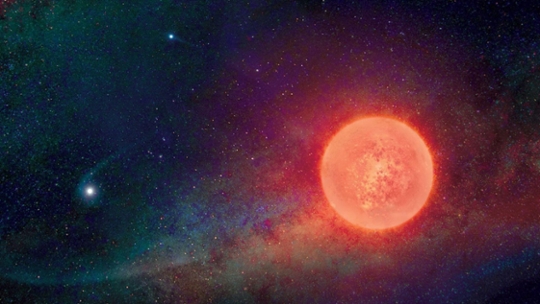
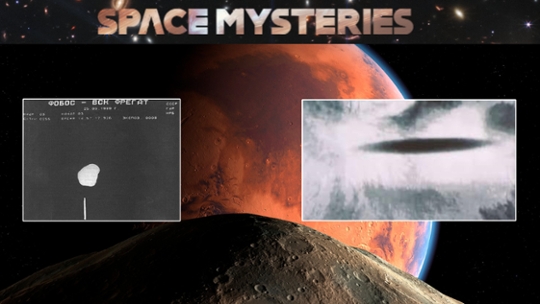
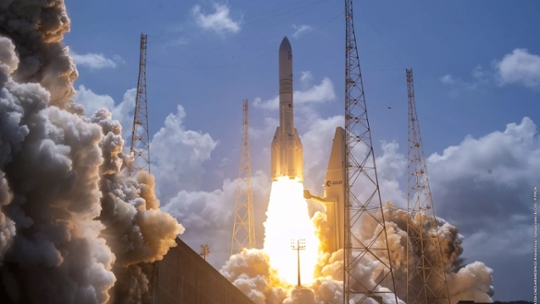
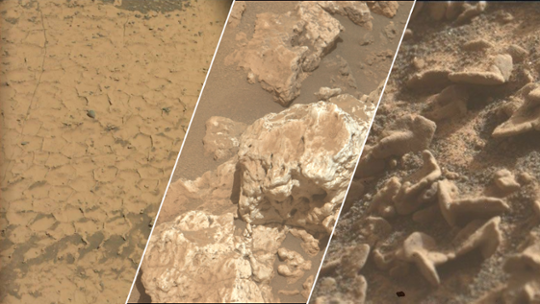
Astronomers discover rare triple star system | 'Potato chips' on Mars | Black Friday space deals

|
|||||||||||||||||||||||||||||||||||||||||||||||||||||||||||||||||||||||||||||||||||||||||||||||||||||||||||||||||||||||||||||||||||||||||||||||||||||||||||||||||||||||||||||||||||||||||||||||||||||||||||||||||||||||||||||||||||||||||||||||||||||||||||||||||||












Subscribe to:
Posts (Atom)