 |
| Created for znamenski.spacecom@blogger.com | Web Version |
|
|
|

This week's night sky is packed with beautiful moon pairings and easy-to-spot celestial sights. A delicate crescent moon glides past brilliant Venus before teaming up with mighty Jupiter and the sparkling Beehive Cluster later in the week. It's also a fantastic time to track Jupiter's Galilean moons.
Elsewhere in this issue, I'll be sharing my experience with the Vespera Pro and how it completely changed my mind about astrophotography from light-polluted skies. We'll also take a look at the newly announced Vespera III and Vespera Pro 2 smart telescopes, plus showcase a stunning reader astrophoto capturing Markarian's Chain in remarkable detail.
Here's what to watch for in the nights ahead.
Daisy Dobrijevic
Skywatching Editor
|
|
 |
| (Starry Night) |
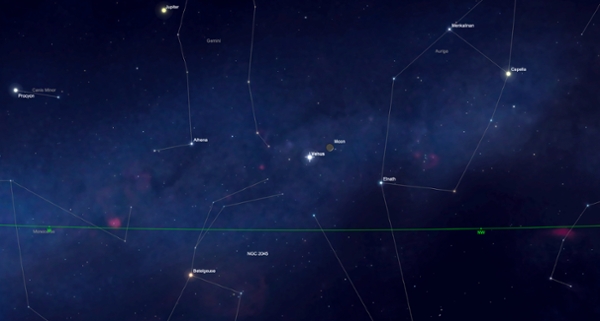
A delicate crescent moon pairs up with brilliant Venus low over the western horizon after sunset in one of the prettiest twilight displays of the month. The pairing is easy to spot with the naked eye, while binoculars will reveal beautiful earthshine softly illuminating the moon's darkened surface. Read more: Venus and a razor-thin moon steal the show after sunset tonight
|
|
 |
| (Starry Night) |
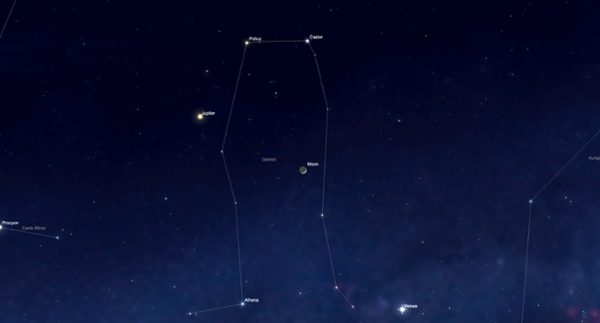
Tonight is a fantastic opportunity to turn binoculars or a small telescope toward Jupiter in Gemini. Even basic equipment will reveal Jupiter's four largest moons — Io, Europa, Ganymede and Callisto — lined up beside the giant planet. Check back later in the evening and you might notice the moon's shifting position in orbit.
|
|
 |
| (Starry Night) |
|
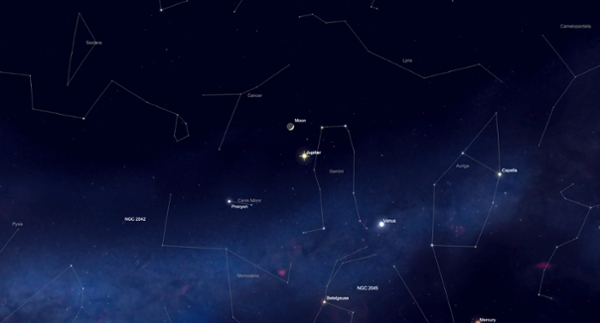
The waxing crescent moon slides close beside Jupiter in the western evening sky, creatign an eye-catching conjunction.
|
|
|
 |
| (Starry Night) |
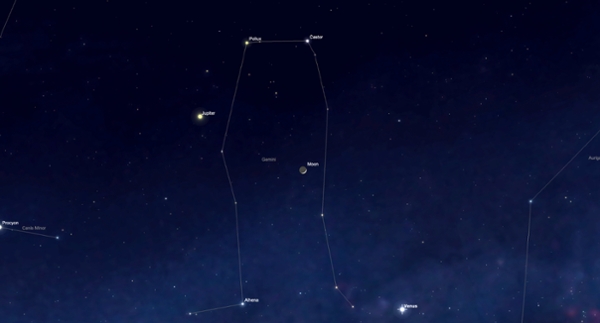
The waxing crescent moon passes close to the beautiful Beehive Cluster (M44) in Cancer. Using binoculars, place the moon just outside the edge of your field of view and the Beehive Cluster will appear as a glittering swarm of stars.
|
|
 |
| (Starry Night) |
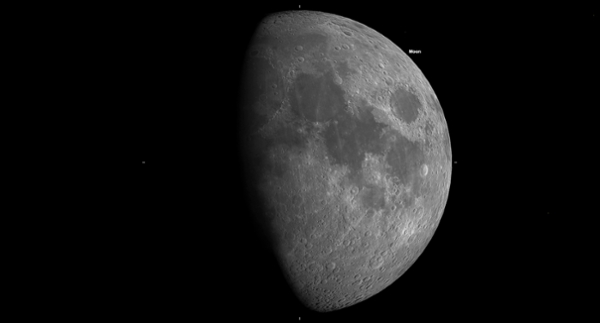
The waxing gibbous moon dominates the evening sky in Leo and offers excellent opportunities for lunar observing. Aim binoculars or a telescope along the terminator (the dividing line between light and shadow) to reveal dramatic crater walls, jagged mountain peaks and intricate lunar detail.
|
|
|
The moon reaches its first quarter phase on Saturday, May 23. This is one of the best times of the month for observing our lunar neighbor because sunlight strikes the surface at a shallow angle, casting long shadows that dramatically highlight craters, mountains and other lunar features along the terminator.
Want to explore more? Check out our ultimate guide to observing the moon for tips and tools to get the most out of each phase.
|
|
|
|
Surrounded by streetlights and terraced houses, I never expected to capture detailed deep-space images from my backyard until I tried the Vaonis Vespera Pro telescope.
|
|
|
|
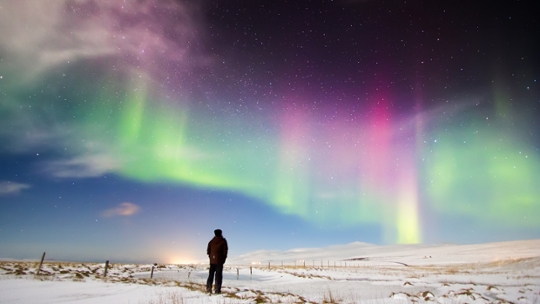
The latest aurora forecast for tonight helps you make sure you're in the right place at the right time to see the northern lights.
|
|
|
|
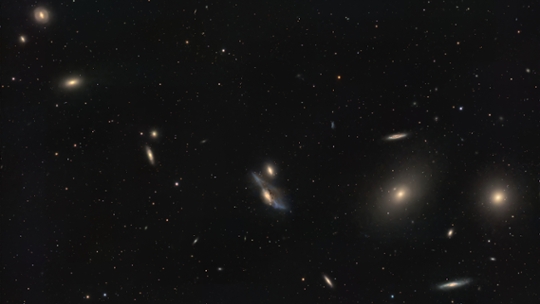
The string of galaxies is just a small part of the colossal Virgo Galaxy Cluster
|
|
|
| Astronomy Kit and Accessories |
|
|
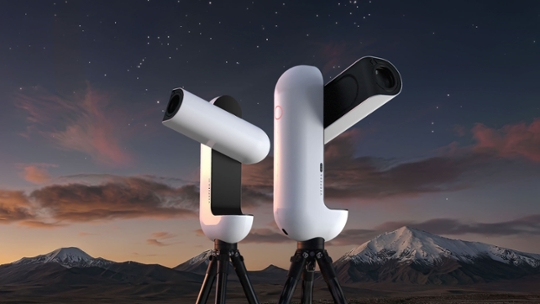
They boast a new optical design for sharper images and host a bunch of upgraded features to make stargazing a breeze. The Vaonis Vespera III and Vespera Pro 2 are available now.
|
|
|
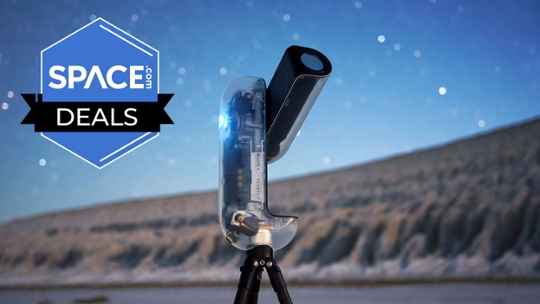
The Vespera II X edition features a sleek, transparent shell and has internal temperature sensors for optimized deep sky observation.
|
|
|
| Stay up-to-date on all things space science, news, and entertainment by subscribing to our newsletters. |
|
 |
|
 |
Follow Night Sky This Week |
 |
 |
 |
 |
|
|
|
When you purchase through links in our content, we may earn an affiliate commission.
Future US LLC © |
| Full 7th Floor, 130 West 42nd Street, New York, NY, 10036. |
|
|
|
|


No comments:
Post a Comment