Will Starliner astronauts ride a SpaceX Dragon home? | Colossal solar flare erupts from 'rule-breaking' sunspot | Supermoon: what is it and when is the next one?
Created for znamenski.spacecom@blogger.com | Web Version
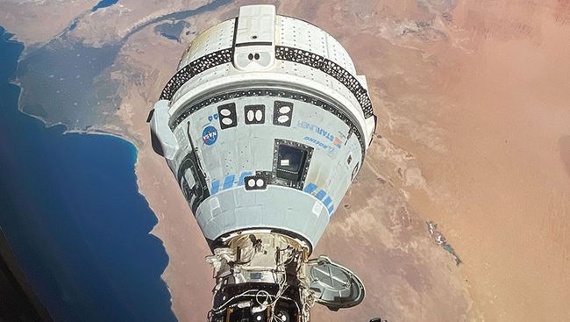
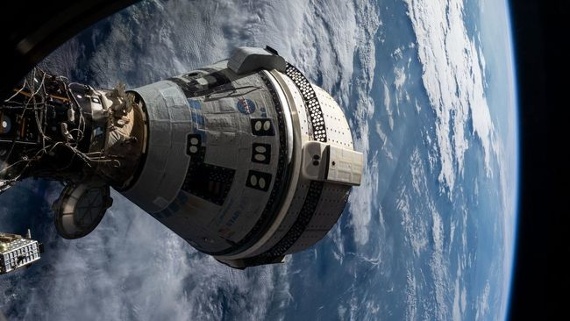
Boeing's two Starliner astronauts may learn their fate in the next two weeks - but, for now, NASA still doesn't know when the duo is coming home. So, while the space agency's best and brightest works with Boeing engineers to continue assessing data from ground tests of Starliner's systems, the spacecraft's crew, NASA astronauts Butch Wilmore and Sunita Williams, will remain aboard the International Space Station (ISS) for now.
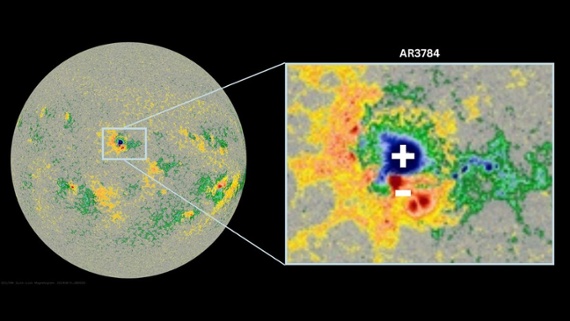
(NASA's Solar Dynamics Observatory, SDO/HMI Magnetogram)
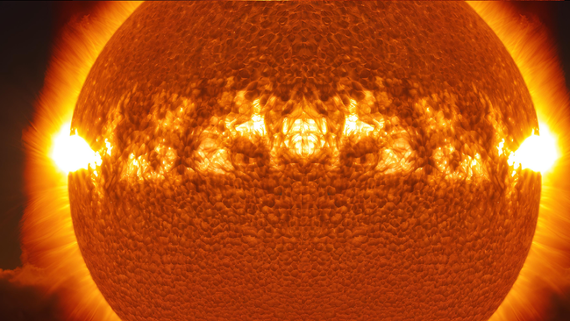
The active sun is kicking into overdrive and we could be in for yet more dazzling auroras. In the early morning hours yesterday, the sun unleashed the most powerful class of solar flare, in a potent X-class eruption. The solar flare peaked at 2:40 a.m. EDT (0640 GMT) and caused shortwave radio blackouts over the sunlit portion of Earth at the time of the eruption, Asia and the Indian Ocean.
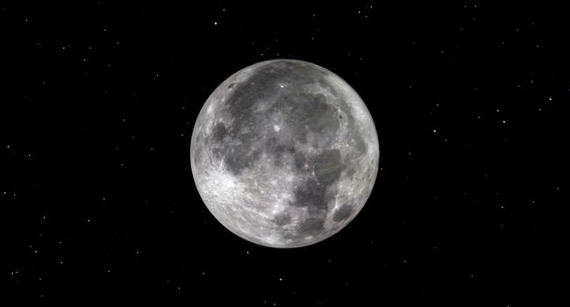
The next supermoon will be on Aug. 19 at 2:26 p.m. ET (1826 GMT) This will be the first of four supermoons in a row for 2024. A supermoon occurs when the full moon coincides with the moon's closest approach to Earth in its orbit. This makes the moon appear slightly brighter and closer than usual, though the difference is difficult to notice with the naked eye. According to Fred Espanak, eclipse expert and retired NASA astrophysicist, there will be four supermoons in 2024, in August, September, October and November.
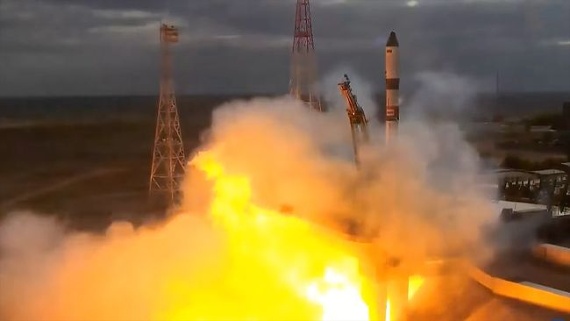
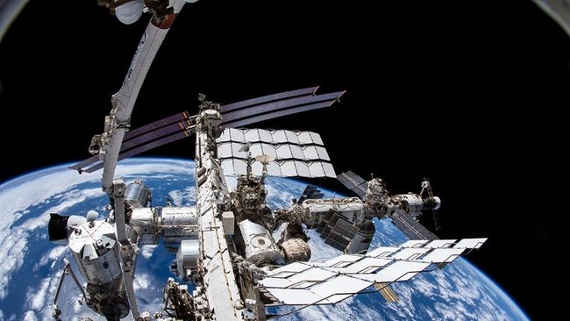
Russia launched its 89th cargo craft to fly to the International Space Station on Wednesday (Aug. 14). The unplioted Progress MS-28 freighter launched atop a Soyuz rocket from the Russia-run Baikonur Cosmodrome in Kazakhstan at 11:20 p.m. EDT (0320 GMT and 8:20 local Baikonur time on Aug. 15).
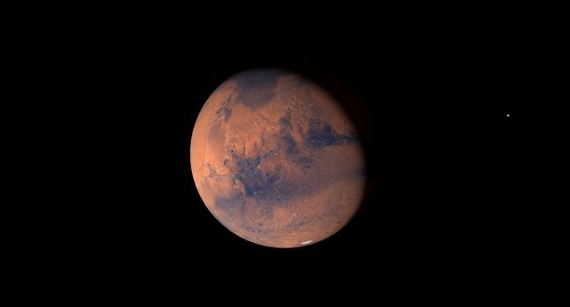
Researchers have tested a suite of anemometers -- tools that measure wind speeds -- designed to operate on the surface of Mars. These would not be the first to take the Martian wind speed, to be clear, as landers have done that for quite some time. Even Viking 1 managed to grab some Martian wind measurements nearly fifty years ago. But, according to the researchers' findings, this system could allow future landers -- or future humans -- to measure Martian winds with more sensitivity than ever before.
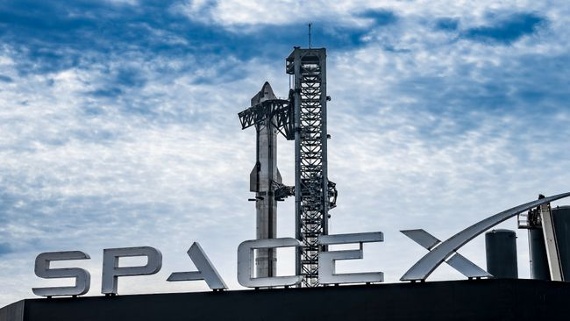
SpaceX has strongly refuted a media report claiming the company violated environmental regulations by releasing pollutants related to Starship launches in South Texas. CNBC reported on Aug.12 that "Elon Musk's SpaceX violated environmental regulations by repeatedly releasing pollutants into or near bodies of water," through its water deluge system at its Starbase launch facility, South Texas, citing a state agency.
Getting a live play-by-play of astronauts in space during future Artemis moon missions could eventually be possible thanks to laser technology.NASA is testing a space communication method that, instead of using radio waves to transmit data and videos, uses a laser beam to connect ground control on Earth with astronauts on the moon.
Live: NASA providing Boeing Starliner update today | ISS research project will benefit cancer patients on Earth | Get 40% off the Celestron StarSense Explorer LT 80AZ
Created for znamenski.spacecom@blogger.com | Web Version
NASA will provide an update about the ongoing astronaut mission of Boeing's Starliner capsule today (Aug. 14), and you can listen live. The teleconference about Starliner's Crew Flight Test (CFT) mission will begin at 1:00 p.m. EDT (1700 GMT). NASA will stream audio of the briefing live, and Space.com will carry the broadcast if the agency makes it available as usual.
Since 2013, research has been underway on the International Space Station (ISS) National Lab with astronauts conducting experiments in microgravity to ultimately help improve our lives here on Earth. Diseases like cancer remain one of the top causes of death across the United States and, in a recent release, the National Cancer Institute estimated that this year alone will see more than 2 million cancer cases diagnosed with a death toll of more than 600,000 people. With numbers like that, even medical research in space has been focused on cancer-related treatment.
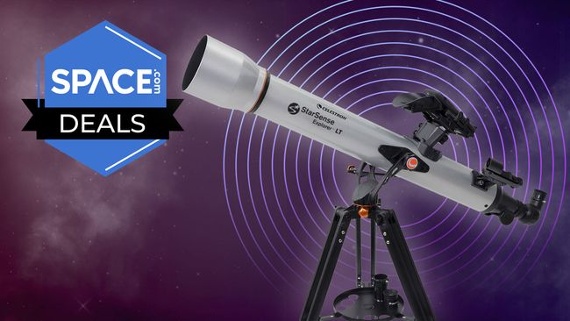
This telescope features an 80mm objective lens diameter, meaning a decent amount of light will pass through, making objects appear bright and clear. It comes with accessories to enhance the stargazing experience and it works with technology so you can locate and learn about night sky targets using your smartphone. This telescope is from one of the most trusted and reliable out there, Celestron, and you can check out our roundup of the best Celestron telescope and binoculars deals for other discounts.
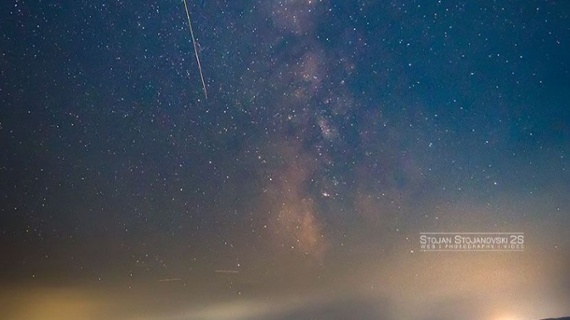
In the early hours of Tuesday morning (Aug. 13), at around 1:03 a.m. local time, a dazzling Perseid fireball streaked across Macedonian skies above Lake Ohrid. A webcam system installed throughout the Lake Ohrid region captured the dramatic sight.
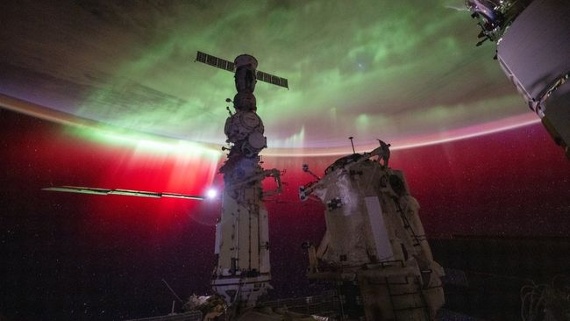
The moon's glow meets a multicolored aurora in a new astronaut image from space. International Space Station (ISS) and NASA astronaut Matthew Dominick, a veteran photographer of the Expedition 71 crew, captured the moon and auroras from his perch 250 miles (400 kilometers) above Earth.
Astronomers have discovered a new star that is 30 times larger than the sun and could force a major rethink of stellar evolution theories. The star, designated J0524-0336 and located around 30,000 light-years from Earth, has a shockingly high concentration of the element lithium when compared to the sun at its current age or other stars of similarly advanced ages.
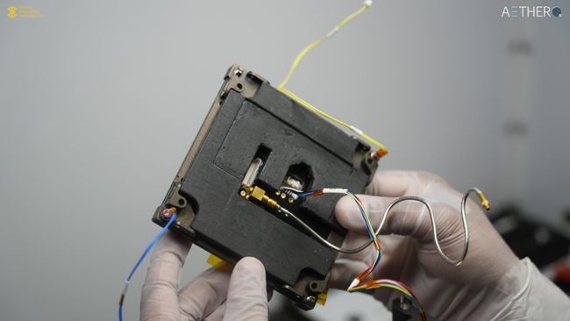
AI is about to take a major leap to conquer the final frontier. An Nvidia Jetson Orin NX chip, one of the most popular AI and edge computing GPUs, will travel to space soon on SpaceX's Transporter 11 mission.
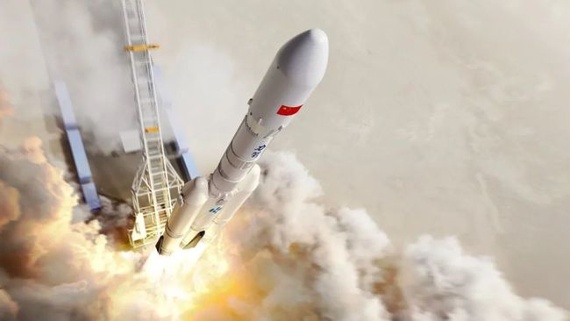
The Chinese commercial space firm CAS Space is making serious progress on a new, reusable rocket. CAS Space is testing components of the Kinetica-2 -- also known as Lijian-2 - rocket in preparation for a planned first launch next year. The company aims to begin recovering and reusing the rocket's first stage and boosters by 2028.