Sun reels back in giant plasma plume in 'failed eruption' | Chang'e 6 probe launches moon far side samples into space | SpaceX targets June 6 for next Starship launch
Created for znamenski.spacecom@blogger.com | Web Version
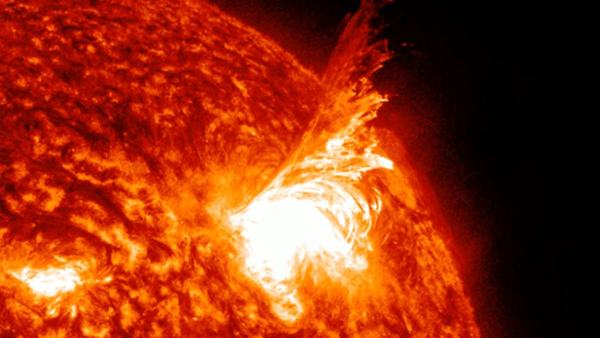
The sun erupted in a dazzling spectacle on Monday, firing off an intense solar flare captured in stunning detail by a NASA solar observatory. But when you look closely at the eruption, it appears that much of the solar material in the vast plasma plume didn't manage to escape the grasp of the sun. Here's what we know.
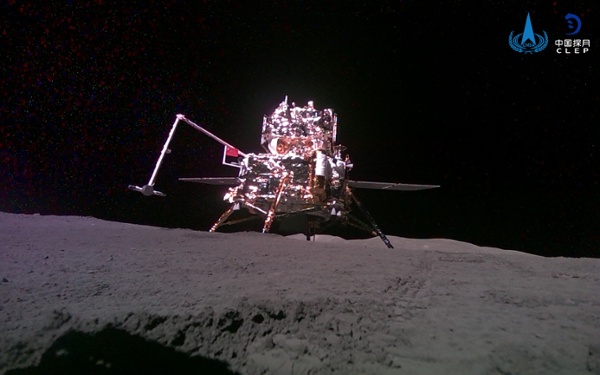
China's Chang'e 6 lander has sent home stunning images of the lunar surface on the mysterious far side of the moon and even launched samples of into orbit for their return to Earth. See some amazing photos of China's latest lunar lander here!
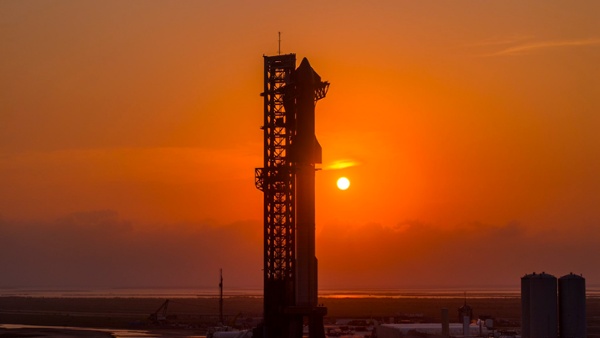
SpaceX's giant Starship rocket will fly again this week, if all goes according to plan. The company has announced that it's targeting Thursday, June 6, for the fourth-ever test flight of Starship, the biggest and most powerful rocket the world has ever known. "Starship is ready to fly," SpaceX founder and CEO Elon Musk wrote on X.
The August 2027 "eclipse of the century" will bring the longest totality since 2009 and the longest totality on land since 1991, and will be visible from a broad path sweeping across the Atlantic Ocean, Southern Europe, North Africa and the Middle East. Here are the best places to see it.
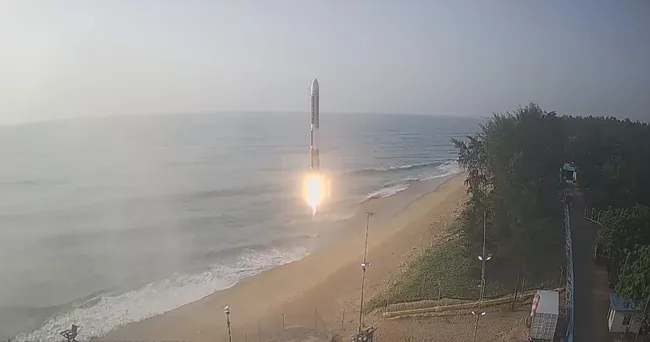
Indian space startup Agnikul Cosmos successfully launched the nation's first 3D-printed rocket engine on Thursday (May 30), paving the way for reduced time and costs associated with building rockets and boosting the country's spacefaring capabilities. "It signals the ability to rapidly assemble rockets that is unparalleled," Satyanarayanan Chakravarthy of Agnikul Cosmos.
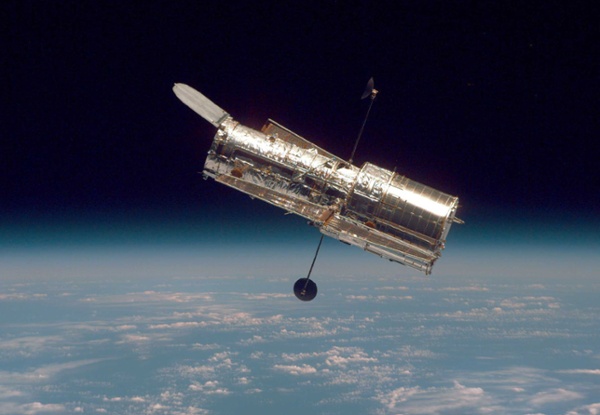
NASA is holding a press conference today about the future of the Hubble Space Telescope to "provide an update on operations" for the telescope. Sounds routine, right? Well, not necessarily. The Hubble Telescope team doesn't often hold press conferences like this — especially one with only two presenters, both of whom sport rather lofty titles.
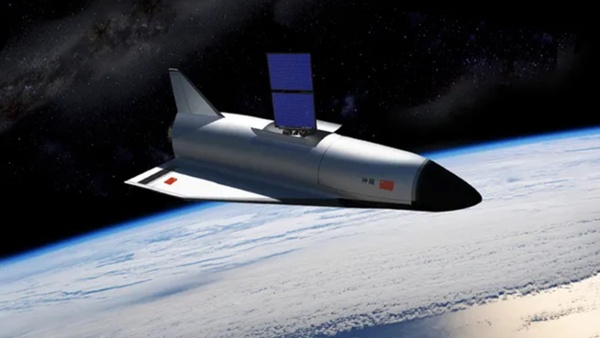
The experimental orbital plane, named Shenlong, which means "divine dragon" in Chinese, has been in orbit for 168 days. Space activity tracker Jonathan McDowell first spotted the spacecraft's recent activity on May 24. The new object has since been cataloged as 59884 (International designator 2023-195G) by the U.S. Space Force space domain awareness teams, SpaceNews reported.
A sinister new announcement trailer for the turn-based tactical game "Warhammer 40K: Mechanicus 2" has entered our sphere and it immediately sets the perfect tone and eerie atmosphere for sci-fi gamers to indulge in all their grimdark fantasies.
Boeing's 1st Starliner astronaut flight aborted before launch | Space Quiz! How many astronauts will fly on Starliner's 1st flight | China lands Chang'e 6 probe on far side of the moon
Created for znamenski.spacecom@blogger.com | Web Version
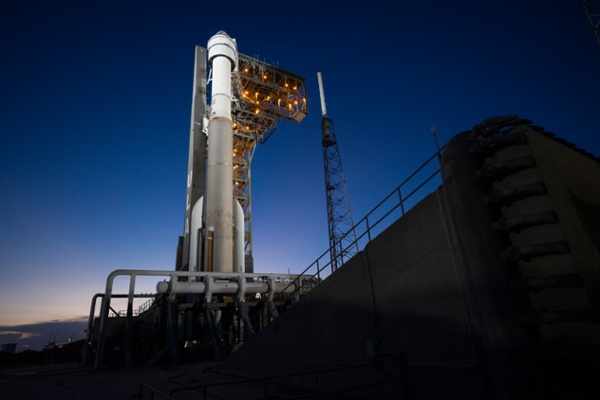
An Atlas V rocket with the Starliner spacecraft on the launch pad in Florida. (NASA/Getty Images)
The first crewed launch of Boeing's Starliner spacecraft has been delayed until no earlier than June 5 after an automatic abort cut short an attempted flight Saturday afternoon just minutes before liftoff. The abort may have been caused by a faulty computer card in the ground launch sequencer system housed in a building at the base of Starliner's launch pad.
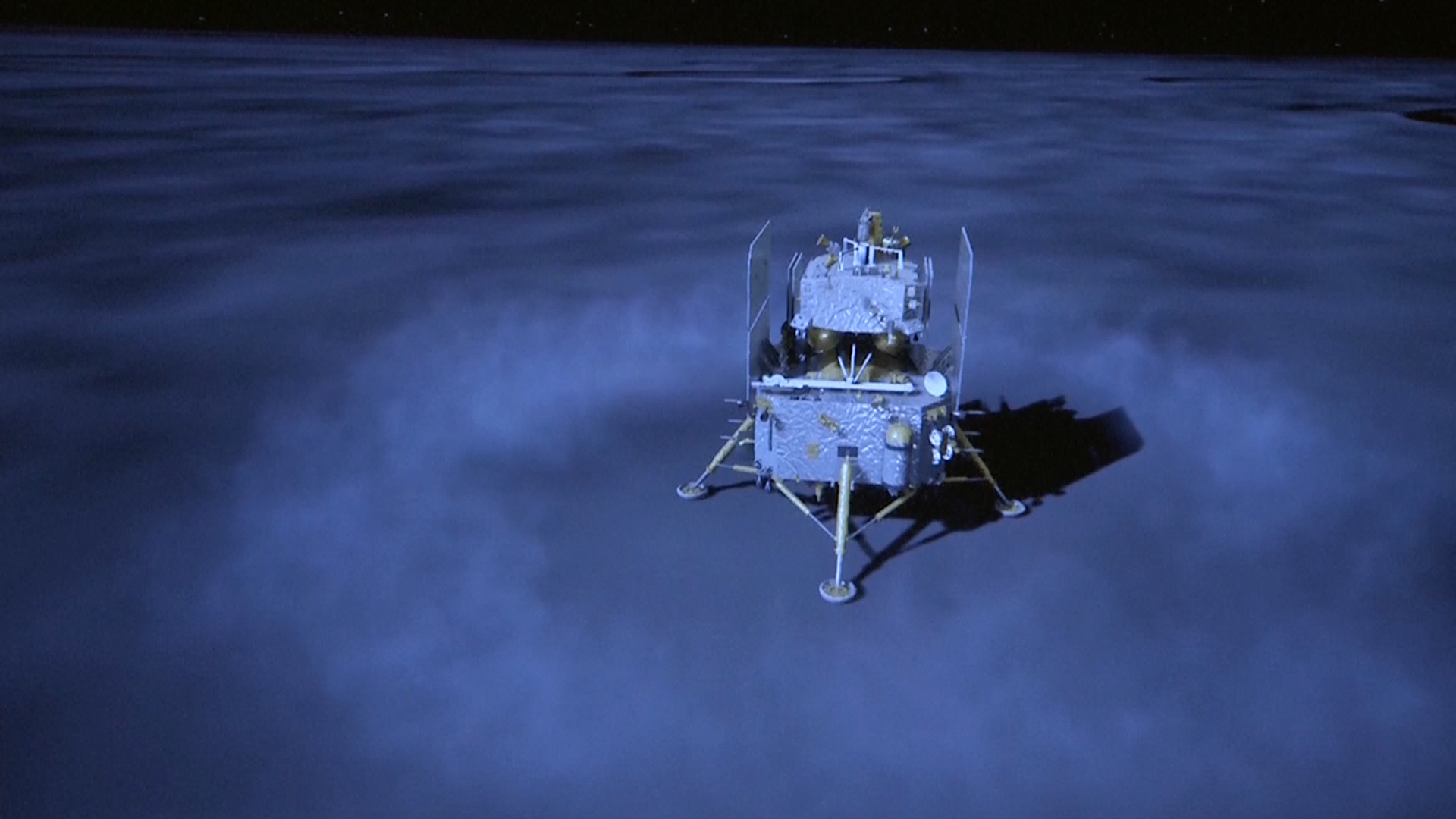
China's robotic Chang'e 6 sample return mission touched down inside Apollo Crater non the far side of the moon, within the giant South Pole-Aitken basin, at 6:23 a.m. Beijing Time on Sunday (June 2) , according to Chinese space officials. The probe "successfully landed in the pre-selected area," China's space agency said.
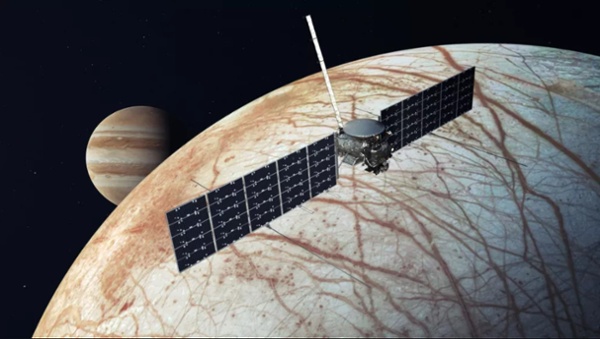
The Europa Clipper mission, which aims to reach Europa by 2030, is stacked with a number of instruments that can help scientists understand the moon's complex geology and composition — ultimately, researchers want to use these tools to get a better idea of Europa's habitability. In other words, they want to learn whether this moon has favorable conditions for life to exist (life as we know it, at least).
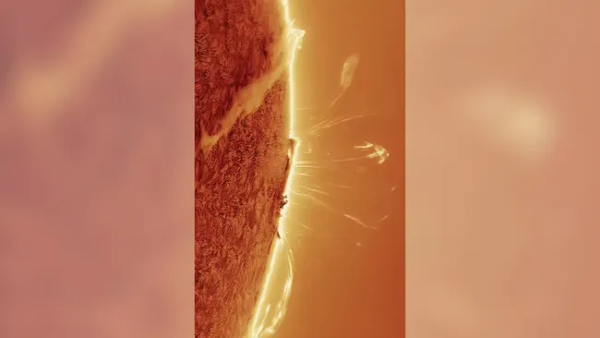
Astrophotographer Andrew McCarthy has been keeping a watchful eye on sunspot AR3697 as it appears over the sun's southeastern limb. The incredible footage, captured from his backyard in Arizona showcases the turbulent nature of the sunspot region in great detail. "Unlike most celestial objects, the sun looks quite different from day to day, and is filled with exciting events like flares or coronal mass ejections. There's always something interesting to look at!" McCarthy told Space.com in an email.
In this episode of This Week in Space, Rod Pyle and Tariq Malik discuss the latest updates on Boeing's Starliner spacecraft, the potential for aurora sightings due to increased solar activity, and China's ambitious lunar exploration program with returning guest Mike Wall, Spaceflight Editor at Space.com. Tune in and get spaced!
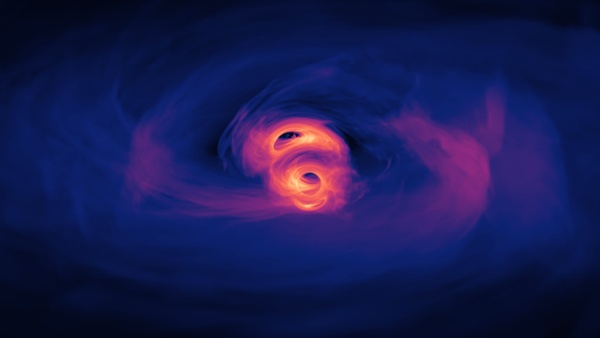
(NASA's Goddard Space Flight Center/Scott Noble; simulation data, d'Ascoli et al. 2018)
One of the most profound messages Stephen Hawking left humanity with is that nothing lasts forever — and, at last, scientists could be ready to prove it. In a new study, scientists say they may have found a way to cement Hawking's famed "Hawking radiation" leaking from black holes as science fact.
Japanese billionaire Yusaku Maezawa won't shoot for the moon on SpaceX's Starship after all. "I signed the contract in 2018 based on the assumption that dearMoon would launch by the end of 2023," Maezawa said in a statement on X (formerly Twitter). "It's a developmental project so it is what it is, but it is still uncertain as to when Starship can launch."