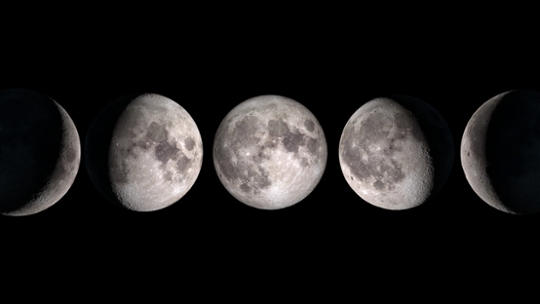
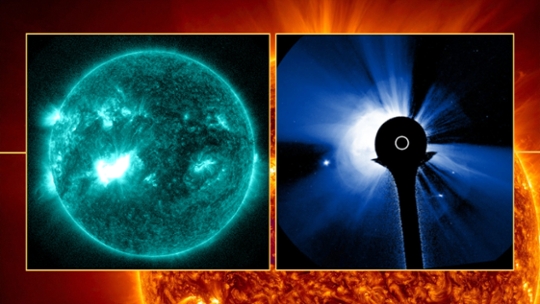
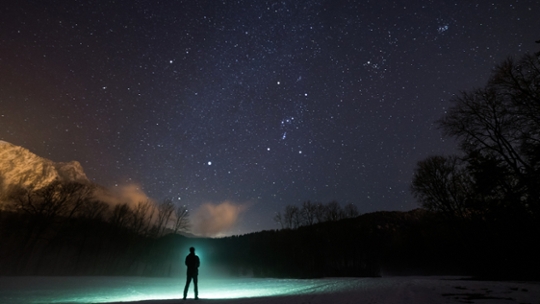
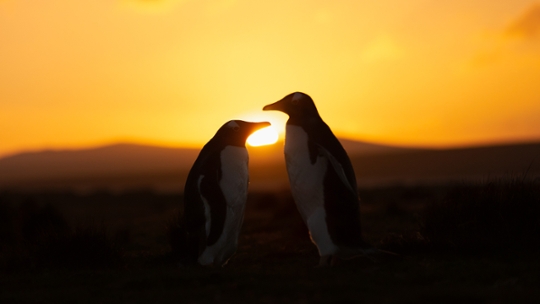
 | | Created for znamenski.spacecom@blogger.com | Web Version | | | |  It's an active week both on the sun and in the night sky. A colossal X-class solar flare has erupted from the sun, launching a fast coronal mass ejection (CME) that is now en route to Earth and expected to arrive within about 24 hours. If conditions align, the incoming storm could bring elevated geomagnetic activity — and possibly auroras — in the days ahead. We'll be tracking what it means and what to watch for as the solar storm approaches. Back under darker skies, the moon takes center stage this week. Look for Mare Crisium glowing inside a young crescent, Saturn and Neptune sharing the evening sky, and a dramatic lunar cliff revealed by low-angle sunlight. There's also a short-lived lunar illusion to catch — but it'll take a bit of patience and good timing. Elsewhere in this issue, we're counting down to an annular solar eclipse that may be witnessed by more penguins than people and rounding up the top five winter objects every stargazer should have on their observing list. Here's what to watch for in the nights ahead. Daisy Dobrijevic Reference Editor | | 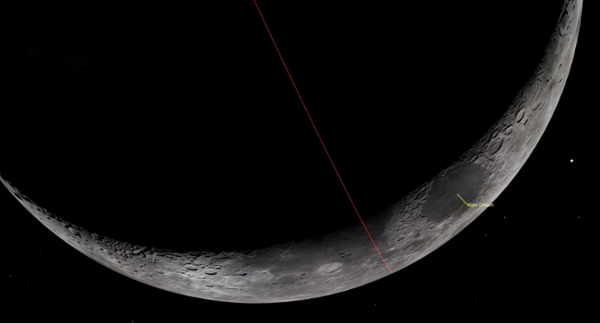 | | (Starry Night) | The dark oval of Mare Crisium is beautifully framed inside the crescent moon this evening. The 345-mile-wide basin sits near the moon's eastern edge and is easy to spot with the naked eye, binoculars, or a small telescope. | | 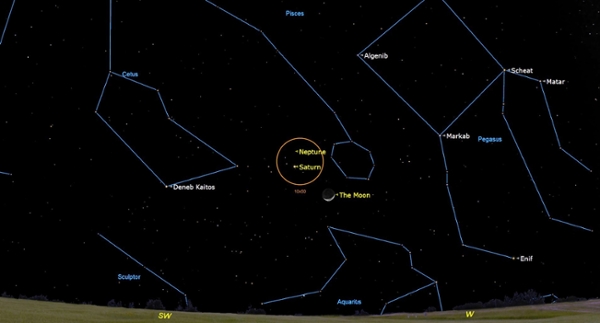 | | (Starry Night) | After sunset, the thin crescent moon shines near Saturn in the southwestern sky. Once darkness falls, binoculars or a small telescope will reveal faint Neptune hovering just above Saturn before the trio sets later in the evening. | | 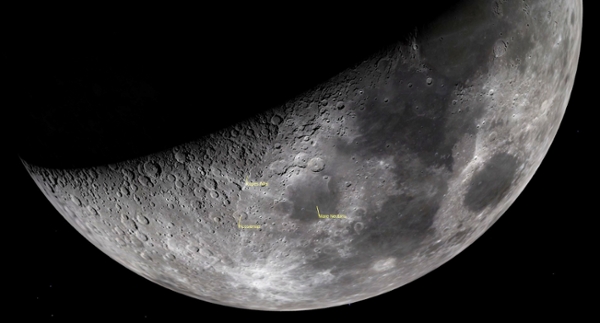 | | (Starry Night) | Low-angle sunlight highlights Rupes Altai, a dramatic lunar escarpment that rises up to 1 km above the surface. Binoculars or a telescope will show its sweeping curve along the rim of ancient Mare Nectaris. | | 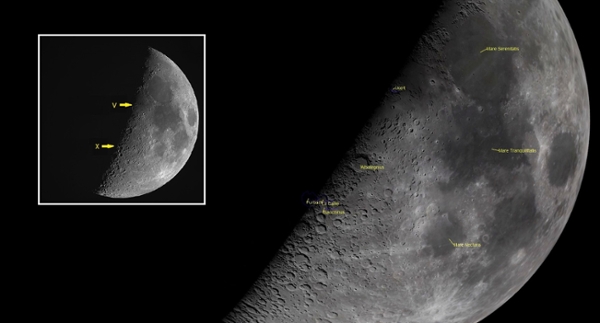 | | (Starry Night) | For a short window near first quarter, sunlight creates the famous lunar X — an optical illusion formed by illuminated crater rims along the terminator. On Jan. 25, it begins forming around 4:30 p.m. EST (2130 GMT), peaks near 6 p.m. EST (2300 GMT), and fades soon after. Strong binoculars or a small telescope work best. | | | The moon reaches first quarter this weekend, bringing half-lit views and excellent contrast along the terminator. This phase is ideal for spotting surface details like craters, ridges, and escarpments as shadows stretch across the lunar landscape.
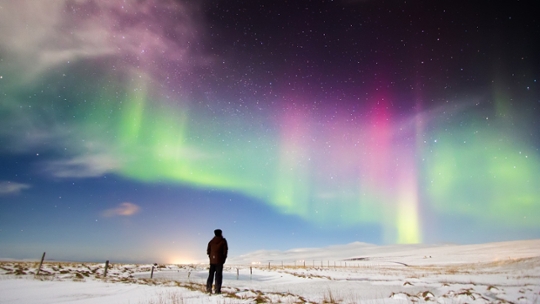
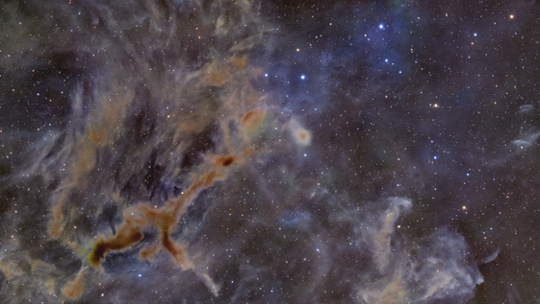
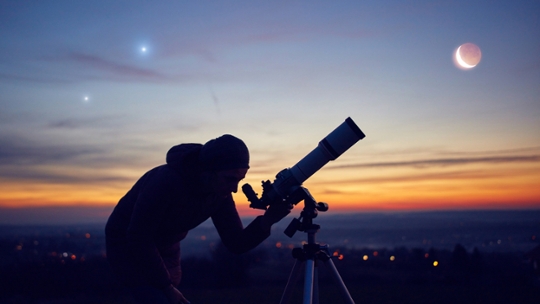
Want to explore more? Check out our ultimate guide to observing the moon for tips and tools to get the most out of each phase. | | | | Aurora alert! The colossal solar storm could impact and trigger impressive northern lights. | | | From Orion's glowing nebula to the sparkling Pleiades, these winter targets reward anyone willing to brave the cold. | | | | The first solar eclipse of the year will take place on Feb. 17, 2026. | | | | The latest aurora forecast for tonight help you make sure you're in the right place at the right time to see the northern lights. | | | | The shadow nebula LDN 1245 is located in the constellation Cassiopeia. | | | | Astronomy Kit and Accessories | | | The best telescopes for seeing planets can help you spot Jupiter, Saturn, Mars and Mercury. | | | Investing in one of the best power banks and power stations means you can have your devices charged and ready, even on the go. | | | | Stay up-to-date on all things space science, news, and entertainment by subscribing to our newsletters. | |  | |  | Follow Night Sky This Week |  |  |  |  | | | | | Future US LLC © | | Full 7th Floor, 130 West 42nd Street, New York, NY, 10036. | | | | |



No comments:
Post a Comment