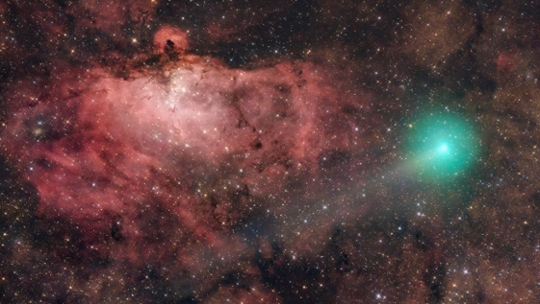
 | | Created for znamenski.spacecom@blogger.com | Web Version | | | |  Hello skywatchers, This week brings a subtle but beautiful mix of celestial moments as we head into winter. You can watch a star visibly fade and recover in real time, spot a razor-thin crescent moon before sunrise and enjoy especially dark skies thanks to a micro new moon. Dec.21 also marks the Northern Hemisphere's winter solstice, the shortest day and longest night of the year, and the slow return of longer days. There's more beyond the skywatching highlights, too! Don't miss a stunning reader-submitted astrophoto capturing Comet SWAN glowing near the Pillars of Creation, and a news story revealing interstellar comet 3I/ATLAS caught in fresh images from both the Hubble Space Telescope and ESA's JUICE mission. Here's what's up this week.
Clear skies,
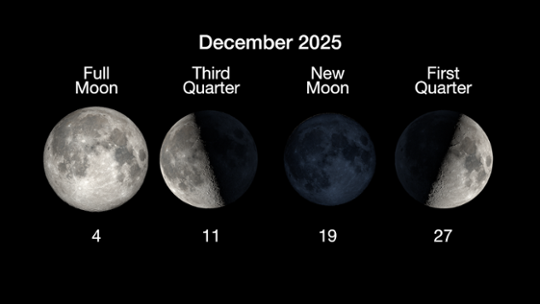
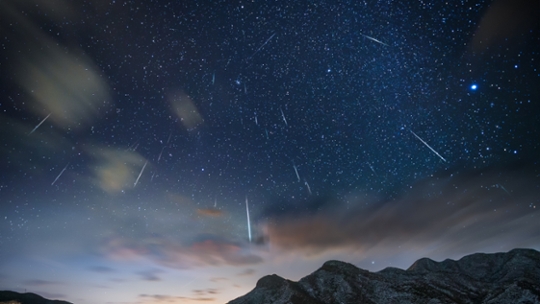
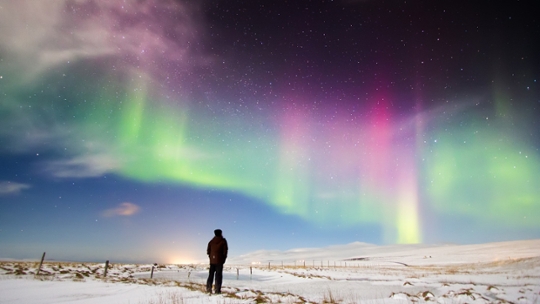
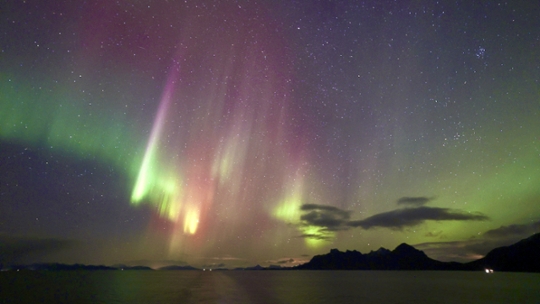
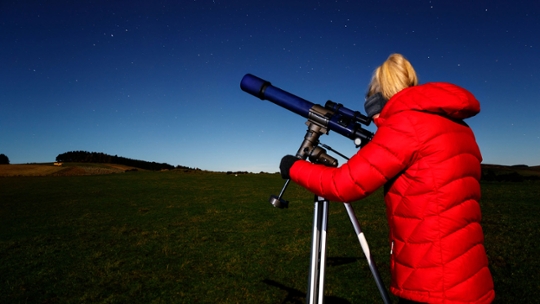
Daisy Reference Editor, Space.com | | 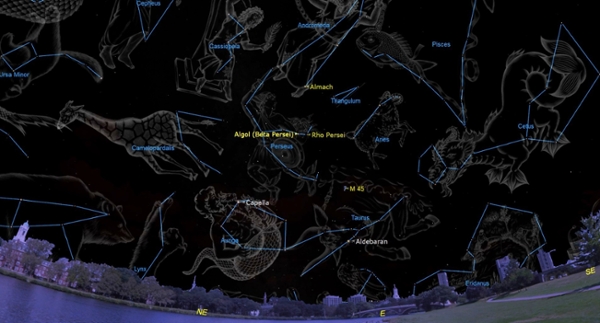 | | (Starry Night) | The variable star Algol in Perseus will begin dimming around 5:27 p.m. EST (2227 GMT), fading from magnitude 2.1 to about 3.4 as its companion star eclipses it. Algol reaches minimum brightness around 10:27 p.m. EST (0327 GMT on Dec. 18) before gradually brightening again. The change is easy to spot with unaided eyes or binoculars. | | 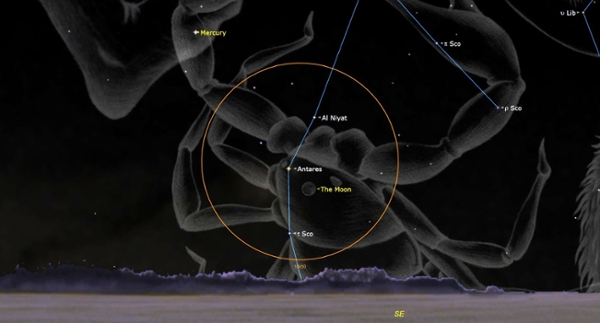 | | (Starry Night) | Before dawn, a razor-thin crescent moon will sit just below Antares, the red heart of Scorpius, close enough for binocular views. Mercury will shine about a palm's width above them. Best seen in the hour before sunrise. | | 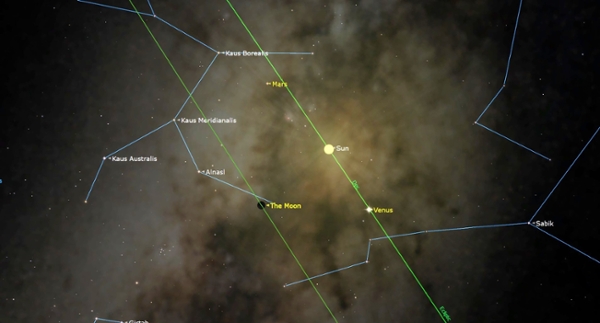 | | (Starry Night) | | The new moon reaches new phase at 0143 GMT, which converts to 8:43 p.m. EST on Friday, Dec. 19. Occurring near apogee, this micro new moon delivers several nights of dark skies ideal for deep-sky observing. | | | 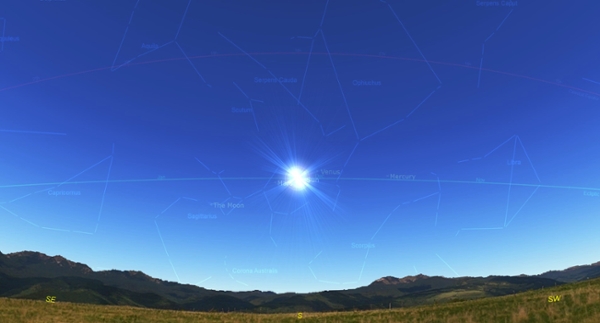 | | (Starry Night) | Winter officially begins in the Northern Hemisphere at 10:03 a.m. EST (1503 GMT). This marks the shortest day and longest night of the year, after which daylight will slowly begin to increase. | | | The moon reaches its new phase at 8:43 p.m. EST on Friday, Dec. 19 (0143 GMT on Dec. 20). While the moon is new, it sits between Earth and the sun, leaving the night sky dark and moon-free for about a day. This particular new moon is a micro moon (the opposite of a supermoon), occurring just days after the moon reaches apogee, its farthest point from Earth. This is great news for skywatchers as this new moon provides several evenings of excellent dark skies, making it a great week to explore faint star clusters, nebulas and the Milky Way before moonlight returns to the evening sky. Want to explore more? Check out our ultimate guide to observing the moon for tips and tools to get the most out of each phase. | | | | December's faint Ursid meteor shower returns under dark skies, offering a small chance of unexpected activity. | | | | The total solar eclipse on Aug. 12, 2026, will offer some fabulous travel options. Here are some adventures to consider. | | | | The latest aurora forecast for tonight help you make sure you're in the right place at the right time to see the northern lights. | | | Sailing through Arctic Norway under the aurora, this voyage redefines what cruising and chasing the northern lights can really be. | | | | Comet C/2025 R2 (SWAN) was imaged in October as it crossed the galactic plane of the Milky Way. | | | | Astronomy Kit and Accessories | | | These are the best small telescopes you can buy in every category. | | | The best monocular devices on the market offer a lightweight alternative to binoculars. Try using one this month to view the full moon. | | | | Stay up-to-date on all things space science, news, and entertainment by subscribing to our newsletters. | |  | |  | Follow Night Sky This Week |  |  |  |  | | | | | Future US LLC © | | Full 7th Floor, 130 West 42nd Street, New York, NY, 10036. | | | | |



No comments:
Post a Comment